The Great Migration is one of nature’s most breathtaking spectacles, unfolding across the vast plains of Tanzania’s Serengeti National Park and Kenya’s Masai Mara. Every year, over 1.5 million wildebeest, accompanied by hundreds of thousands of zebras and gazelles, embark on an epic journey in search of food and water. This migration is not just a simple movement from one place to another, it is a relentless battle for survival, shaped by the rhythms of seasonal rains and the ever present threat of predators.
Spanning approximately 2,900 kilometers, the migration follows an ancient cycle, dictated by the availability of fresh grazing lands. Along the way, the herds must navigate vast open plains, dense woodlands, and crocodile infested rivers, all while evading predators such as lions, cheetahs, and hyenas. The journey is perilous, and only the strongest survive, making it one of the most dramatic and emotionally charged wildlife events on Earth.
For wildlife lovers, photographers, and adventure seekers, witnessing the Great Migration firsthand is an experience like no other. The sight of thousands of wildebeest thundering across the plains, the heart stopping moment when they hesitate at a river’s edge before taking the plunge, and the raw intensity of predator-prey interactions make this a bucket list experience. However, the key to truly appreciating the migration lies in careful planning, choosing the right time and place to be in the heart of the action.
In this guide, we’ll explore the best camps for witnessing the Great Migration to ensure you get the most out of your migration safari. Whether you’re eager to witness the thrilling Mara River crossings, the calving season in the southern Serengeti, or the dramatic predator encounters along the way, we’ll provide expert insights to help you plan the perfect Great Migration experience.
Understanding the Great Migration: A Month by Month Breakdown
Calving Season (January to March) | Southern Serengeti & Ndutu Plains, Tanzania
The calving season marks the beginning of the Great Migration cycle, unfolding in the southern Serengeti and Ndutu Plains of Tanzania. During these months, the vast grasslands become a nursery for over 500,000 newborn wildebeest, as pregnant females give birth in near synchrony. This mass birthing event, occurring over just a few weeks, provides a unique opportunity to witness one of nature’s greatest survival stories. The lush, nutrient-rich grass of the region offers an ideal environment for the young calves to take their first steps, but this time of abundance also attracts an influx of predators eager to take advantage of the vulnerable newborns.
With so many calves being born daily, predator activity is at its peak. Lions, cheetahs, leopards, hyenas, and jackals lurk in the tall grass, waiting for an opportunity to strike. The abundance of easy prey leads to intense hunting action, with predators often working in coordinated attacks. Cheetahs, known for their lightning fast speed, take advantage of the open plains to chase down young wildebeest, while lions use their strength and strategy to ambush herds. Hyenas and jackals act as both hunters and scavengers, making the Ndutu region a hotspot for thrilling predator-prey encounters.
For safari enthusiasts and photographers, calving season offers an entirely different experience from the dramatic river crossings later in the year. The Serengeti‘s landscape is lush and green, providing stunning backdrops for wildlife photography. Additionally, this is one of the best times for intimate wildlife sightings, as fewer tourists venture to the region compared to peak migration months. Whether you’re interested in observing the tender moments between mother and calf, capturing high speed cheetah chases, or witnessing raw survival in action, the Ndutu Plains during calving season is a truly unforgettable safari experience.

Migration Begins Northward (April to June) | Central & Western Serengeti, Tanzania
As the wet season begins to taper off, the herds of wildebeest, zebras, and gazelles begin their long journey northward from the Ndutu Plains and southern Serengeti towards the central and western Serengeti. This period marks a transitional phase in the Great Migration, as the lush grass of the south starts to dry up, pushing the animals to seek fresh grazing lands. The movement is not as frantic as the river crossings later in the year, but the sheer scale of the migration, hundreds of thousands of animals moving together, is an awe-inspiring sight. The central Serengeti, particularly around Seronera Valley, is an excellent place to witness this stage of the migration, as large predator populations, including lions and leopards, follow the herds.
By May and June, the wildebeest reach the Western Corridor, a critical juncture in their journey where they face their first major obstacle, the Grumeti River. Unlike the dramatic Mara River crossings later in the year, the Grumeti River crossings are more scattered and unpredictable. However, they are just as perilous, as the Grumeti is home to some of Africa’s largest Nile crocodiles, who patiently wait for their opportunity to strike. The riverbanks provide an excellent place to observe the tension as wildebeest hesitate before making the dangerous swim. Some try to find safer passage, while others plunge in all at once, creating chaotic yet thrilling wildlife action.
This period is also rutting season, when male wildebeest engage in intense battles for dominance and mating rights. The thunderous clashes of horns and aggressive displays add another layer of drama to the migration. Safari-goers in the central and western Serengeti during this time will witness an ecosystem brimming with action, not only from the migrating herds but also from predators, scavengers, and opportunistic hunters taking full advantage of the migration’s challenges. The landscapes are still lush and green from the rains, making for stunning photography opportunities before the dry season fully sets in.

The Epic Mara River Crossings (July to October) | Northern Serengeti, Tanzania & Masai Mara, Kenya
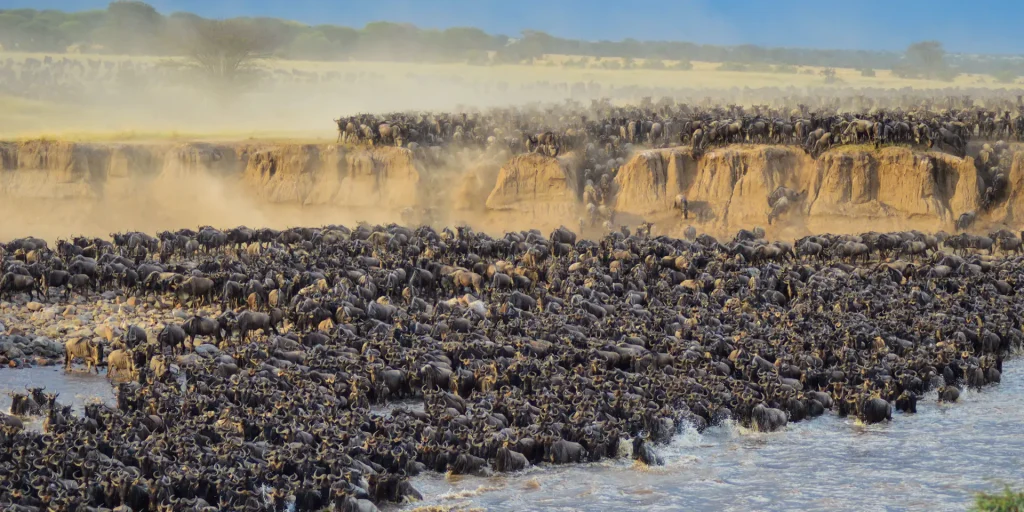
The Mara River crossings are the most dramatic and highly anticipated stage of the Great Migration, drawing thousands of wildlife enthusiasts, photographers, and safari-goers each year. By July, the vast herds of wildebeest, zebras, and gazelles have pushed further north, reaching the Northern Serengeti and the border of Kenya’s Masai Mara. Here, they face one of the greatest challenges of their journey: crossing the crocodile-infested Mara River. The crossings are unpredictable, some days see a few hundred animals braving the waters, while other days witness tens of thousands plunging in all at once. The tension builds as herds gather at the riverbanks, hesitating for hours or even days before one brave wildebeest makes the first move, triggering a frenzied stampede into the rushing waters.
The Mara River is a death trap, home to enormous Nile crocodiles that have been waiting all year for this moment. As soon as the first wildebeest enter the water, chaos erupts, some are swept away by the strong currents, others are snatched by lurking crocodiles, and many struggle to find safe exits on the steep, muddy riverbanks. However, predators on land also take advantage of this spectacle. Lions, leopards, and hyenas patrol the crossing points, ambushing exhausted or injured animals as they reach the other side. The Mara River crossings are not just about survival; they are a raw display of nature’s brutal yet fascinating balance, where only the fittest make it through.
By August and September, the majority of the herds have successfully crossed into the Masai Mara, where they enjoy the lush grasslands of this iconic Kenyan reserve. However, their struggles are far from over, big cat activity is at its peak, with the famed Marsh Pride of lions and other powerful predators thriving on the abundance of prey. The migration is in full swing, and the Masai Mara’s rolling golden savannas provide some of the best wildlife viewing opportunities on the planet. From powerful lion hunts to cheetahs sprinting after young wildebeest, this is prime time for witnessing dramatic predator-prey interactions.
By late October, the cycle begins to shift again as the herds sense the approaching rains in the Serengeti. Slowly, they start making their way back south, leaving behind dust covered trails and a landscape that has sustained them for months. Though their time in the Mara is coming to an end, the journey is far from over, the return migration presents its own challenges, and nature’s cycle continues, ensuring that the drama of the Great Migration never truly stops.
The Journey Back South (November & December) | Masai Mara to Serengeti
As November approaches, the Great Migration begins its final phase of the annual cycle, the long journey back south from the Masai Mara in Kenya to the Serengeti in Tanzania. With the arrival of the short rains, fresh green grass begins to sprout across the eastern and southern Serengeti, signaling to the herds that it is time to return. Slowly, hundreds of thousands of wildebeest, zebras, and gazelles begin their mass exodus from Kenya, retracing their steps through the Mara Triangle, northern Serengeti, and eventually towards the central plains. Though not as dramatic as the Mara River crossings, this leg of the journey is still filled with challenges, as predators follow closely behind, targeting the weakest members of the herd.
By mid to late November, the herds move through the central Serengeti, navigating a landscape that has been transformed by the early rains. This is a time of renewal, as the dry, dusty plains start to flourish with new vegetation. However, the relentless cycle of life and death continues, many wildebeest are exhausted from months of travel, and lions, cheetahs, leopards, and hyenas take full advantage of their weakened state. Additionally, some stragglers fall victim to hidden dangers such as flooded rivers, opportunistic crocodiles, or sudden bursts of extreme weather.
By December, the herds reach the southern Serengeti and the Ndutu Plains, where they will soon begin the calving season once again. The grasses here are rich in nutrients, providing a perfect setting for pregnant wildebeest to prepare for the next generation. As they settle into this temporary sanctuary, the migration enters a quieter phase, yet the predators remain, ensuring that the cycle of life continues. This period is an excellent time for intimate wildlife encounters, as the open plains make it easier to observe hunting behaviors, maternal care, and interactions between different species.
Though the Great Migration is often associated with the dramatic river crossings of mid year, this return journey south is equally significant, shaping the survival of the species and preparing for the next great movement. It is a reminder that in the wild, there is no true end, only a constant rhythm of movement, birth, survival, and renewal. As the herds settle back into the Ndutu Plains, they are unaware that in just a few months, they will begin their perilous journey once again, driven by the timeless pulse of nature.

Choosing the Right Camp or Lodge for Your Safari
When planning a safari to witness the Great Migration, one of the most critical decisions is choosing the right camp or lodge. The ideal accommodation can enhance your experience, ensuring that you’re in the right place at the right time to catch all the dramatic action of the migration. Factors such as location, comfort level, and safari activities should all play a role in your decision. Here’s a breakdown of what to consider when selecting the best accommodation for your Great Migration safari.
Location is Key
The most important factor in choosing the right camp or lodge is its proximity to the migration routes. Depending on the time of year you’re traveling, different areas offer the best wildlife sightings.
Southern Serengeti & Ndutu Plains (January to March) – If you’re visiting during the calving season, staying in the southern Serengeti or Ndutu Plains will allow you to be right in the heart of the action as over 500,000 calves are born and predators are in full force.
Western Serengeti & Grumeti River (April to June) – For those who want to witness the Grumeti River crossings, look for lodges or camps in the western Serengeti, ideally near the river where wildebeest begin to encounter crocodiles and other predators.
Mara River Crossings (July to October) – For the epic Mara River crossings, northern Serengeti or Masai Mara are the prime spots. A lodge or camp located near key crossing points will give you front-row seats to the drama of wildebeest plunging into crocodile-infested waters.
Return to Southern Serengeti (November to December) – If you’re visiting during the return migration, consider staying in the central Serengeti for easy access to the herds as they make their way back south.
Accommodation Type
Your choice of accommodation will depend on your preferred level of comfort and authenticity.
Luxury Lodges – For those who want a more upscale experience, luxury lodges such as Four Seasons Safari Lodge Serengeti or Sanctuary Olonana offer five-star amenities, gourmet dining, and incredible views, often with private decks or pools overlooking wildlife filled plains. These lodges provide top-notch services, including private guides and vehicles.
Classic Tented Camps – If you prefer a more traditional safari experience without sacrificing comfort, classic tented camps like Rekero Camp or Lamai Serengeti offer a mix of authentic tented accommodation and comfort. These camps provide an immersive experience, allowing you to fall asleep to the sounds of the African bush while enjoying high quality service and guided safaris.
Mobile Camps – For a closer connection to nature, mobile camps that move with the migration, like Serengeti Under Canvas or Lemala Mara Mobile Camp, are ideal. These camps provide an authentic, adventurous experience, with the opportunity to be in the heart of the action wherever the herds are located. They also offer more privacy and seclusion as they operate in remote locations.
Safari Activities & Experiences
When selecting a camp or lodge, you should also consider the range of safari activities offered. Different lodges and camps provide different experiences to enhance your safari, from game drives to hot air balloon rides.
Game Drives – Almost all camps will offer daily game drives, but some offer exclusive private safaris, allowing for more flexibility and better chances of spotting wildlife. If you want to get closer to the migration’s heart, ask about private guiding and tailored safari itineraries.
Walking Safaris – Some camps in areas like the Serengeti’s remote zones and Masai Mara’s private conservancies offer walking safaris, giving you a unique perspective on the land and wildlife, including smaller species and plant life that are often overlooked during game drives.
Hot Air Balloon Rides – For a truly unforgettable experience, consider lodges like Four Seasons Serengeti or Sanctuary Olonana, which offer balloon safaris that give you a bird’s eye view of the migration as herds of wildebeest and zebras stretch across the plains beneath you.
Cultural Experiences – Some camps offer the chance to visit local Maasai villages or other cultural experiences, allowing you to learn more about the indigenous people who live in the region and their connection to the land.
1. Singita Mara River Tented Camp (Northern Serengeti, Tanzania)
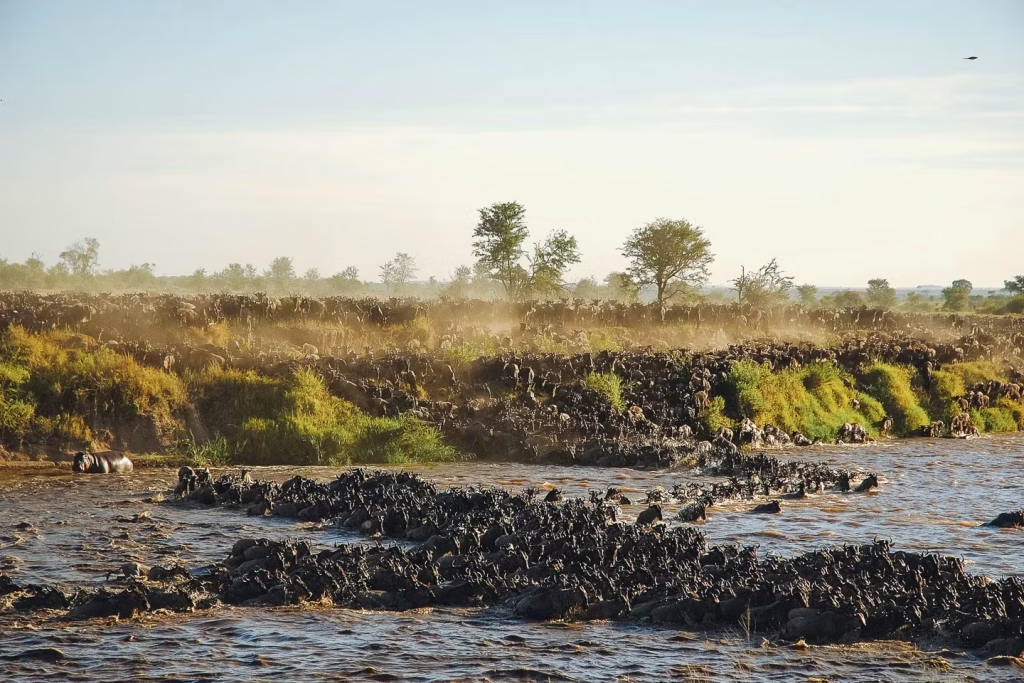
Singita Mara River Tented Camp offers an exclusive, luxurious safari experience in the northern Serengeti, Tanzania, right by the famous Mara River, where some of the most dramatic moments of the Great Migration unfold. This intimate, tented camp is designed for those seeking an immersive, high end experience with front row access to the Mara River crossings, where the wildebeest and zebras face crocodile-infested waters in their pursuit of new grazing grounds. Singita Mara River’s prime location places guests at the heart of the migration action, offering the opportunity to witness the annual spectacle of wildebeest plunging into the river and battling predators.
The camp features six luxurious tents, each equipped with spacious en-suite bathrooms, private viewing decks, and stylish interiors that blend comfort and elegance with the rugged beauty of the Serengeti. Guests can enjoy panoramic views of the river and the surrounding landscape, with the sounds of the wild providing a natural soundtrack to the experience.
The game drives at Singita Mara River are expertly guided, with opportunities to explore the migration’s path, spotting wildebeest herds, zebras, predators, and other iconic wildlife. For an elevated experience, the camp offers hot air balloon safaris, giving guests a bird’s eye view of the Serengeti and the migration’s expansive landscapes. Singita’s commitment to sustainable tourism is evident in its conservation efforts and luxury service, ensuring an exclusive and eco-conscious stay. With its combination of elegance, location, and a strong focus on wildlife conservation, Singita Mara River Tented Camp offers an unparalleled experience for those wanting to witness the Great Migration in comfort and style.
2. Entim Camp (Masai Mara, Kenya)
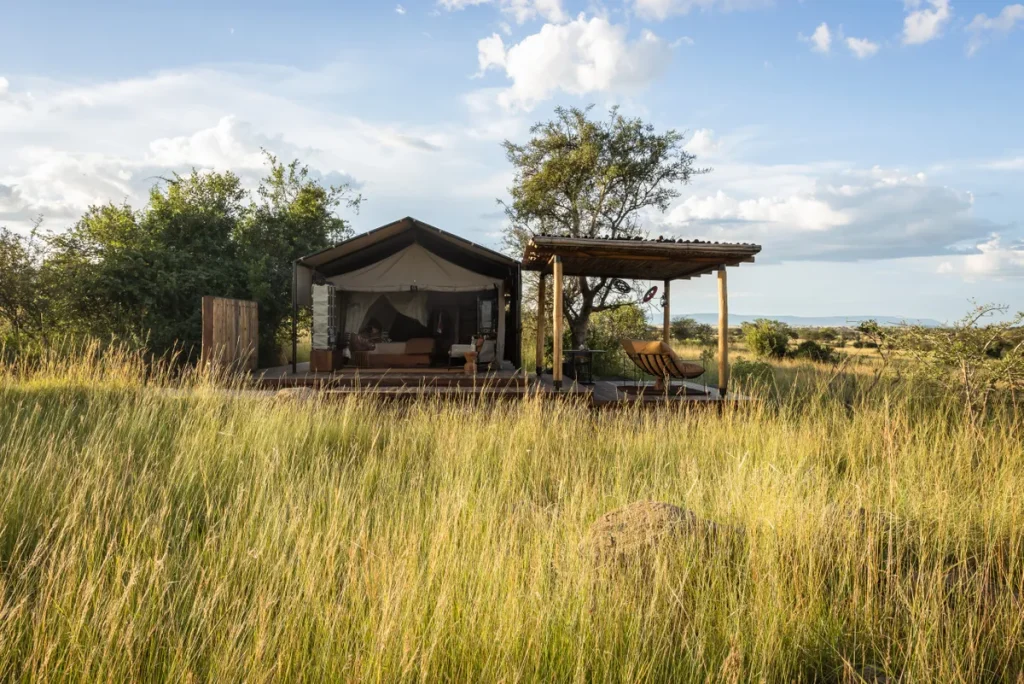
Entim Camp is an intimate luxury tented camp nestled in the Masai Mara, one of the most celebrated wildlife reserves in Kenya. Located on the banks of the Mara River, Entim Camp offers exclusive access to some of the best wildlife viewing opportunities in the region, especially during the Great Migration. Situated in the Mara North Conservancy, the camp’s location ensures a more private, uncrowded safari experience compared to other parts of the Mara, while still offering the same iconic wildlife sightings.
The spacious, elegantly designed tents at Entim Camp provide comfort and luxury in the heart of the wild, featuring en-suite bathrooms, private verandas, and comfortable furnishings. The tents are strategically positioned to offer stunning views of the Mara River or the surrounding plains, allowing guests to wake up to the sight of wildlife in their natural habitat.
Entim Camp’s game drives are expertly led by guides who know the area intimately, ensuring that guests can witness not only the epic river crossings but also the big cats, elephants, and other wildlife that populate the reserve. In addition to game drives, the camp offers walking safaris, where guests can experience the smaller aspects of the Mara ecosystem up close, and cultural experiences with the local Maasai communities, offering a deeper connection to the land and its people. With its luxurious, authentic experience and prime location, Entim Camp provides a memorable and personalized safari adventure.
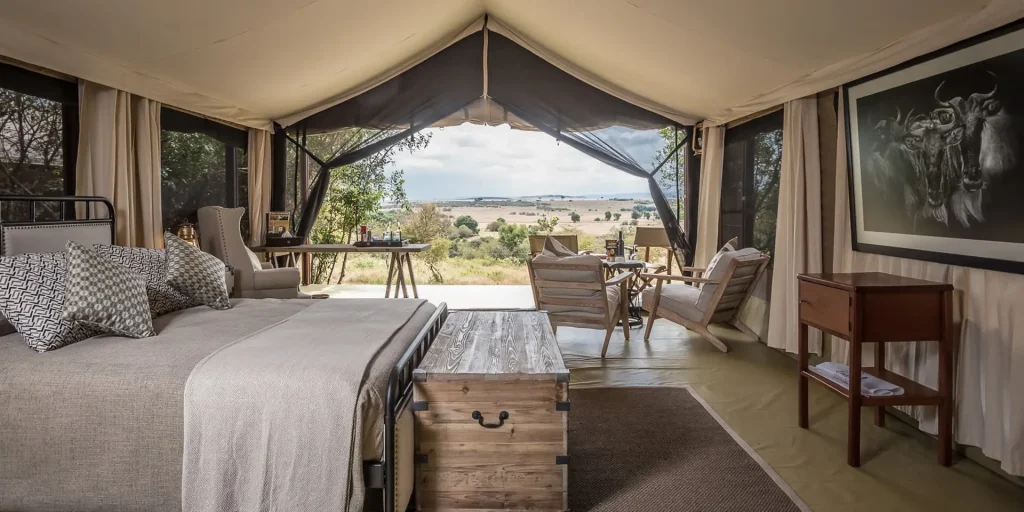
3. Lemala Mara Mobile Tented Camp (Northern Serengeti, Tanzania)
Lemala Mara Mobile Tented Camp offers a luxurious yet immersive safari experience in the northern Serengeti, Tanzania, right in the heart of the Great Migration. This mobile camp is strategically located near key Mara River crossing points, providing guests with front row access to one of the most dramatic and thrilling natural spectacles on Earth: the Mara River crossings. As a mobile camp, Lemala Mara is designed to move with the migration, ensuring that guests are always in close proximity to the herds as they traverse the Serengeti in search of fresh grazing lands. The luxury tents offer comfort and elegance, featuring en-suite bathrooms, spacious decks, and a comfortable living space where you can relax after an action packed day of game drives. The camp offers the opportunity to enjoy exclusive wildlife experiences, guided by expert rangers who know the terrain and migration routes like the back of their hand. With its flexibility and prime location, Lemala Mara Mobile Tented Camp allows you to witness the migration in its rawest and most dramatic form.

4. Rekero Camp (Masai Mara, Kenya)
Rekero Camp is a luxury tented camp located in a prime position in the Masai Mara, Kenya, offering direct access to the Mara River crossings during the Great Migration. Situated on the banks of the Mara River, Rekero provides guests with the perfect base to witness the dramatic scenes of wildebeest and zebras as they brave the dangerous waters during their annual migration. The camp’s traditional tented accommodation is thoughtfully designed to offer comfort in the wild, with luxurious interiors, en-suite bathrooms, and large windows that provide stunning views of the surrounding plains and river. Rekero Camp also prides itself on its excellent guiding team, who are experts in tracking wildlife, ensuring that your game drives are personalized and highly rewarding. In addition to game drives, guests can enjoy cultural visits to nearby Maasai villages, enhancing the safari experience by learning about the local culture and traditions. With its perfect location and excellent service, Rekero Camp is a fantastic option for those wanting to experience the Mara River crossings up close.
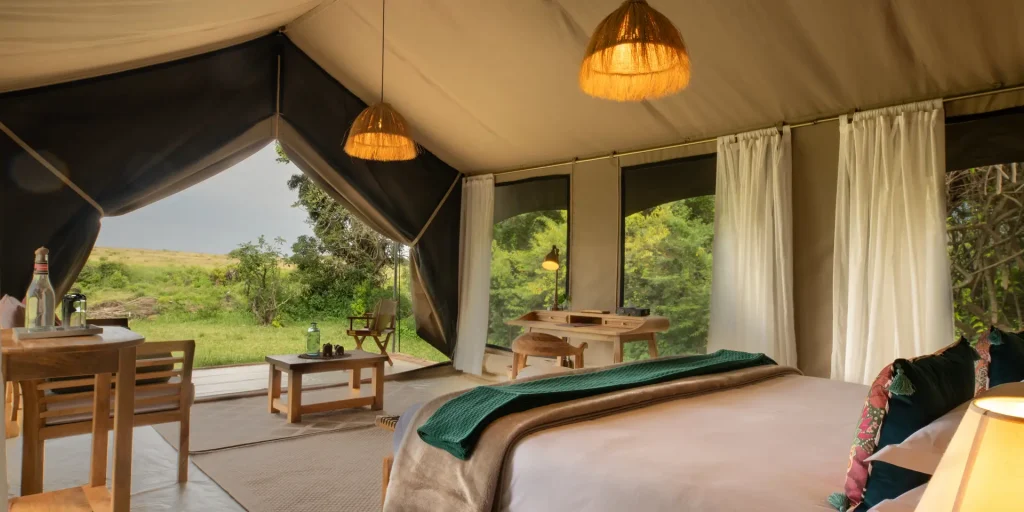
5. Sanctuary Olonana (Masai Mara, Kenya)
Sanctuary Olonana is a luxurious lodge located in the Masai Mara, offering a combination of elegance, comfort, and exclusivity for safari-goers. Situated on the banks of the Mara River, the lodge offers stunning views of the river’s winding course and the wildlife that frequents it, especially during the migration period. The spacious, air conditioned suites at Sanctuary Olonana are designed to provide maximum comfort while maintaining a strong connection to nature, with floor to ceiling windows allowing for panoramic views of the surrounding landscape. The lodge provides a range of safari activities, including game drives, walking safaris, and hot air balloon rides, all guided by expert rangers who know the area intimately. During the migration, Sanctuary Olonana offers exclusive access to the Mara’s wildlife, with frequent sightings of big cats, elephants, and of course, the massive herds of wildebeest and zebras. For those looking for a luxury experience in the heart of the action, Sanctuary Olonana provides the ultimate in comfort and convenience.
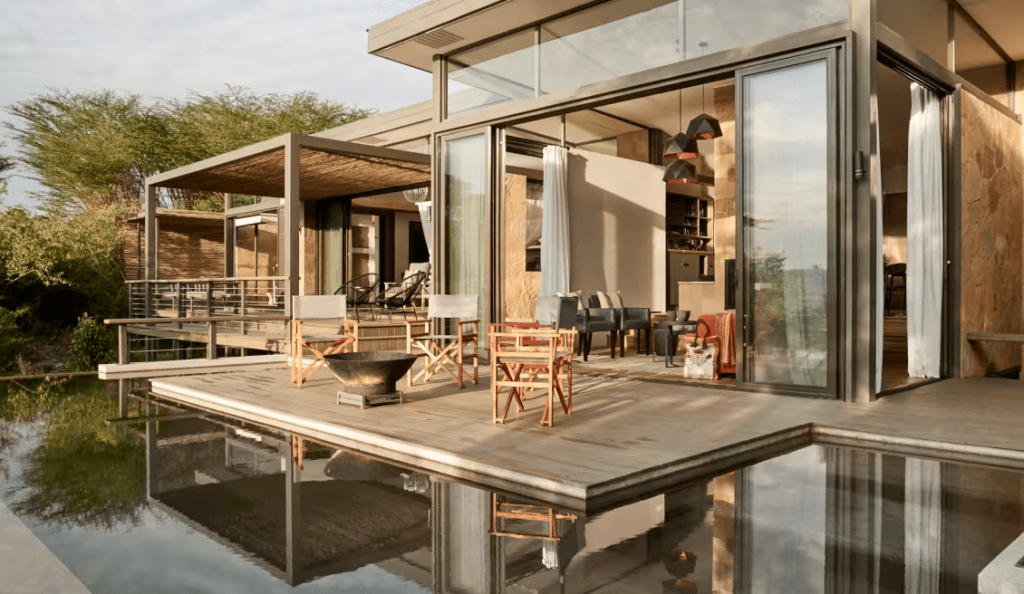
6. &Beyond Serengeti Under Canvas (Serengeti, Tanzania)
&Beyond Serengeti Under Canvas offers a luxurious mobile tented experience in the Serengeti, Tanzania, with the flexibility to move as the migration does. Positioned near key areas of the Serengeti, the camp allows guests to be immersed in the Great Migration while enjoying high end accommodations and personalized service. The spacious tents at Serengeti Under Canvas provide a glamping experience, with en-suite bathrooms, comfortable beds, and elegant furnishings. Guests can enjoy private game drives, led by experienced rangers, to track the wildebeest herds, big cats, and other predators that follow them. The luxurious amenities at this mobile camp combine seamlessly with the wilder aspects of the safari to provide a perfect balance of adventure and relaxation. With its ability to move with the migration, &Beyond Serengeti Under Canvas offers an authentic, yet luxurious safari experience in one of the world’s most iconic wildlife reserves.
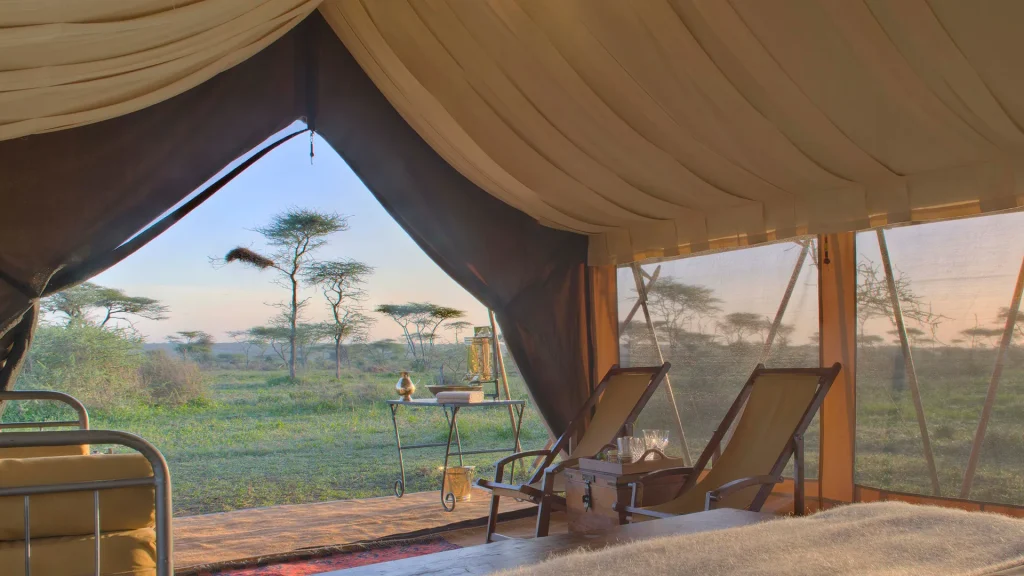
7. Sayari Camp (Northern Serengeti, Tanzania)
Sayari Camp is an exclusive luxury tented camp located in the northern Serengeti, Tanzania, offering an intimate and authentic safari experience. Situated near the Mara River, Sayari Camp is perfectly positioned for witnessing the Mara River crossings, where herds of wildebeest and zebras face the perilous task of crossing crocodile filled waters. The camp features twelve spacious, luxurious tents, each equipped with an en-suite bathroom, a private veranda, and elegant furnishings that provide comfort in the wild. Guests can enjoy game drives through the Serengeti’s stunning landscapes, home to the Big Five, as well as walking safaris that give a more intimate and educational experience. Sayari Camp’s location and exclusivity make it one of the best choices for those wanting a front row seat to the migration without sacrificing comfort and luxury. For those seeking a high end safari experience in one of the most sought after regions of the Serengeti, Sayari Camp is an exceptional choice.
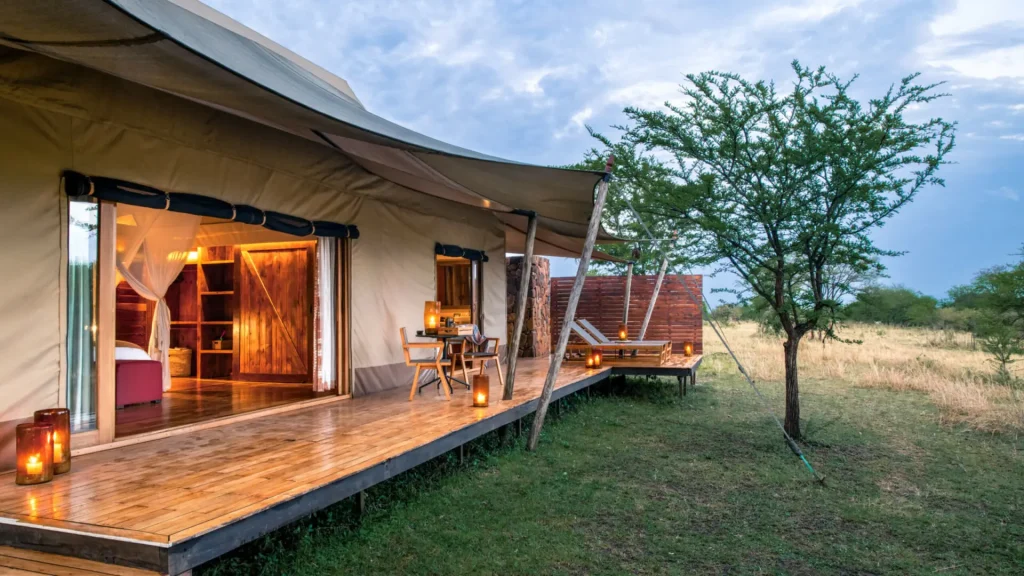
8. Serian’s Serengeti South Camp (Luxury mobile camp that moves with the migration)
Serian’s Serengeti South Camp is a luxurious mobile camp that moves with the migration, ensuring guests experience the Great Migration at its most immersive. This mobile camp is designed to offer authentic, high-end accommodation while staying flexible to follow the migration’s movements across the Serengeti. As the migration progresses, the camp relocates to keep guests in close proximity to the wildebeest herds and predators that are part of the spectacle. The camp’s spacious tents come with en-suite bathrooms and comfortable beds, offering a cozy retreat after a day of thrilling safari adventures. The camp is known for its expert guides, who provide personalized game drives and walking safaris, allowing guests to track the migration while also spotting the Big Five and other wildlife. The mobile nature of Serian’s Serengeti South Camp ensures a unique safari experience, offering a perfect blend of luxury and adventure in one of the world’s most iconic wildlife destinations.
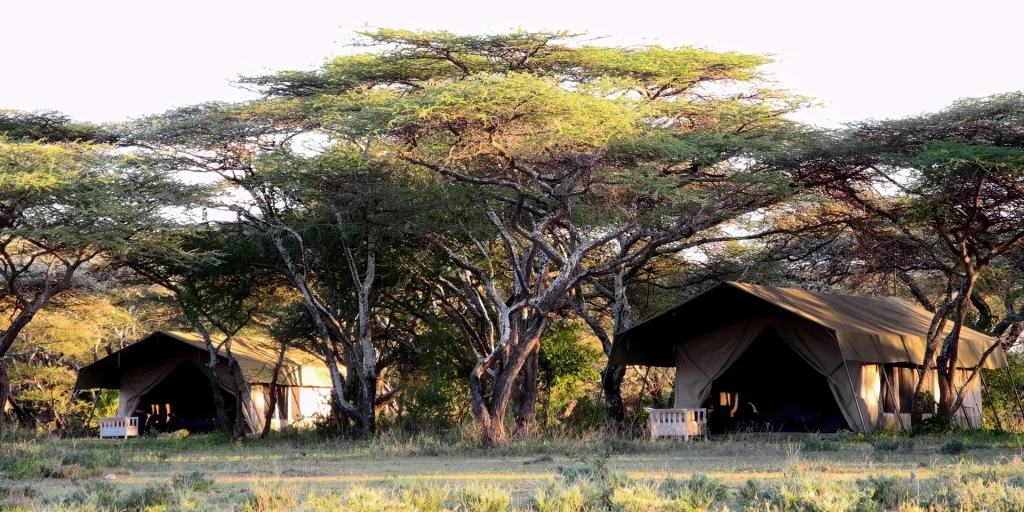
Start Planning Your Migration Safaris. Get In Touch With Us Now To Start Planning.
We have the best experienced safari experts available and prepared to assist you in creating a once in a lifetime beach holiday experience. Fill in Our Contact Form with the details you want or send us a WhatsApp text to reach us at +254780337652.