
The Annual Great Serengeti Wildebeest Migration
Understand About The Great Wildebeest Migration in Serengeti - Serengeti HerdTracker
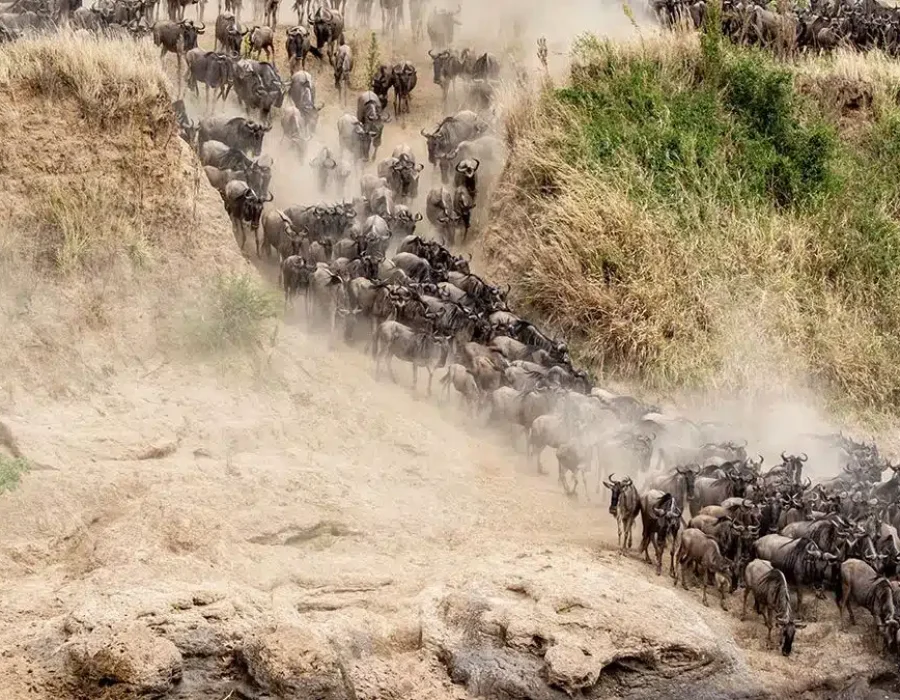
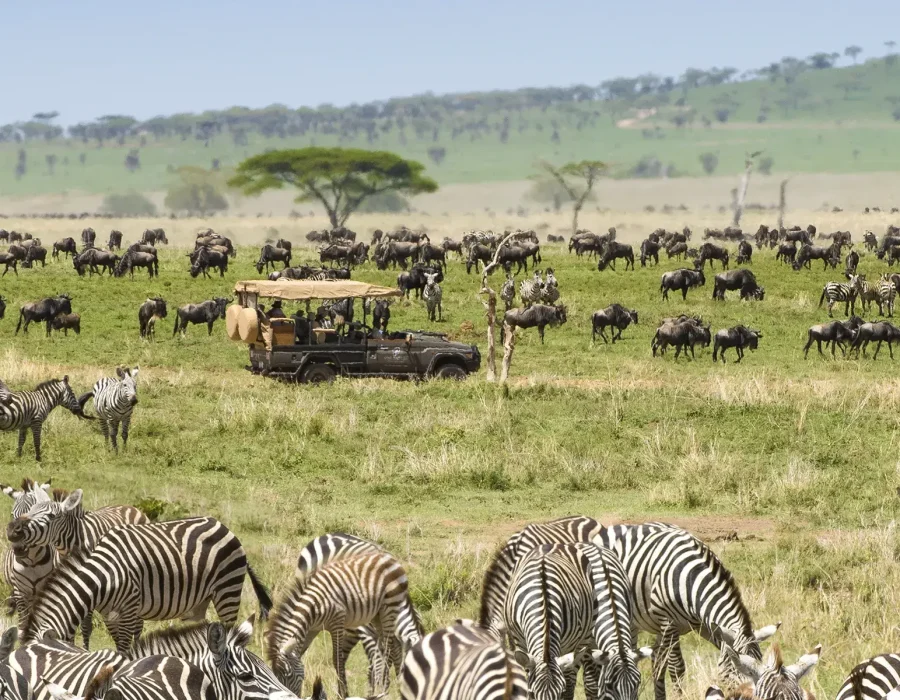
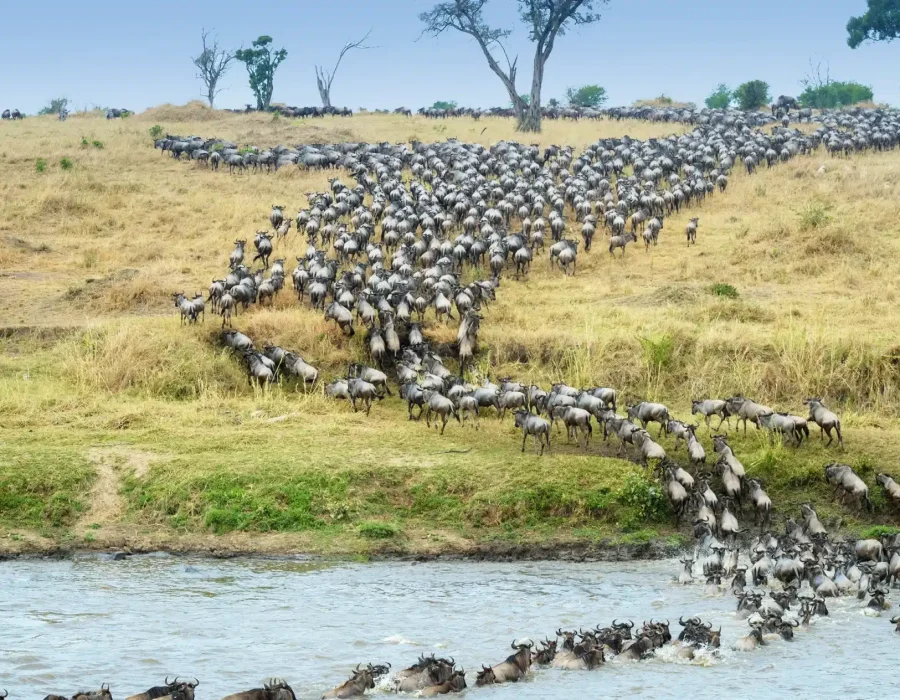
Serengeti is the birthplace of the great Wildebeest Migration. This is where the whole show starts and ends. The Serengeti Migration has been documented to be one of the most phenomenal animal events that has ever been witnessed in the world.
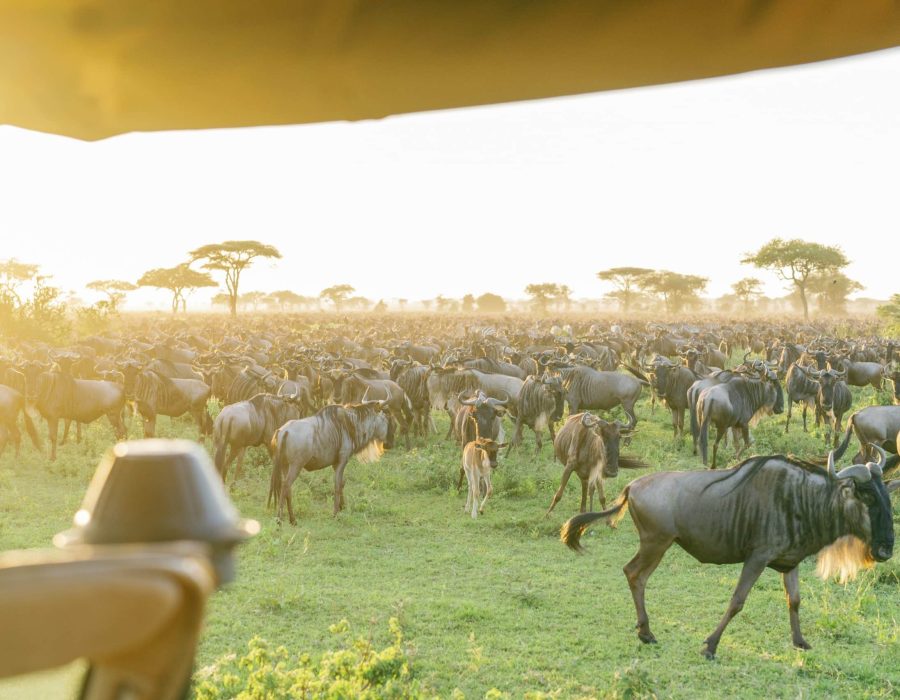
As wildebeests move in the Serengeti, they move in big herds. Something you should know is that Serengeti is quite big, occupying a size of 15,000 KM2 of the Northern part of Tanzania. Hence, it can host more than 2 million animals at a go including other wildlife species.
Serengeti Wildebeest Migration Safari - All You Need To Know
Serengeti Migration Routes - Where the Herds Move
The Serengeti wildebeest migration safari is a world wonder that many come to witness from all over the world, witnessing more than 1.2 million animals migrating for over 1000km yearly.
The Serengeti animal migration moves circularly, covering a major part of the Serengeti in Tanzania and the Masai Mara in Kenya. They move using different routes, paths, and crossing points too.
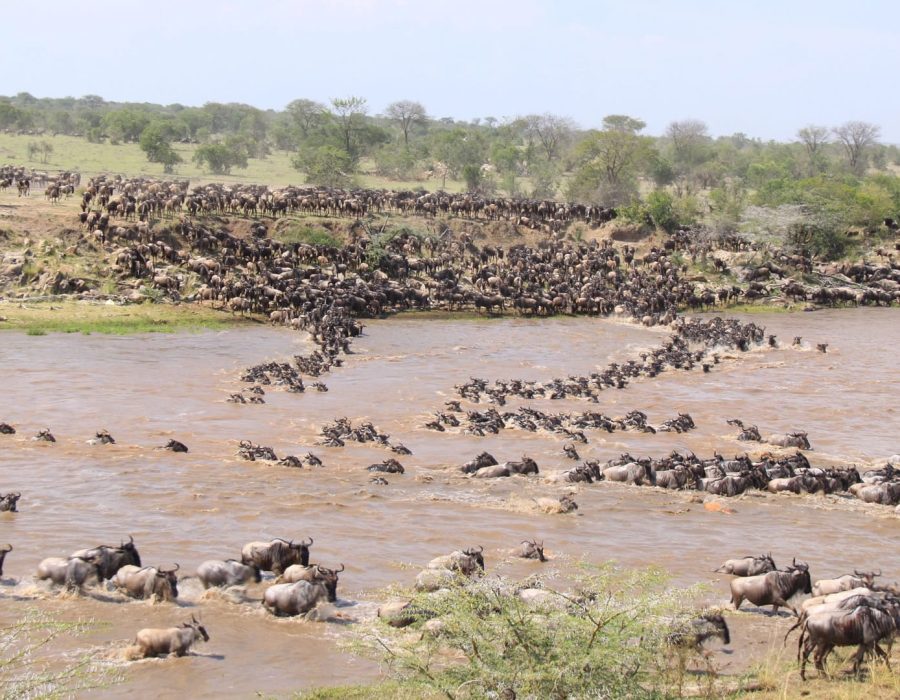
As they move North of Serengeti, they use the Grumeti Side routes, and while going back to the South of Serengeti, they pass through Kogatenge, Eastern Serengeti, and Seronera areas before reaching south.
Best Time to See Wildebeest Migration in Serengeti
When to visit for great migration in Serengeti?
The Best time to see the great migration serengeti depends on a lot of factors…
As much as the migration in Serengeti is available throughout the year, it’s also good to note that there are recommended times to see them.
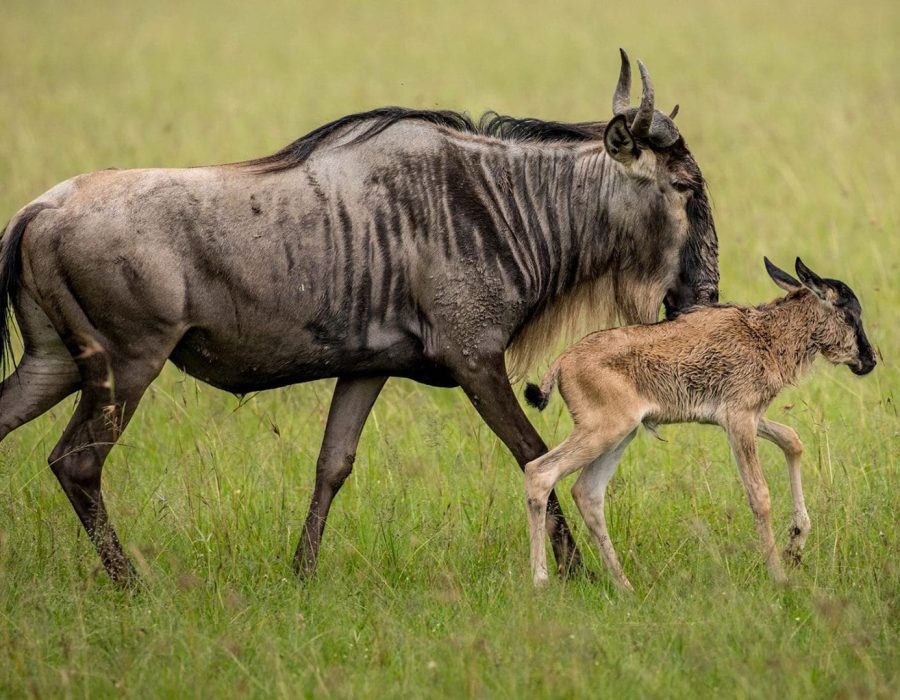
The best time to see the migration in Serengeti is between January and March when they are in Serengeti South. The weather is favorable for travel and holidays, and for taking good photos. The Migration is in the south Serengeti for the calving season.
The other best season to see Serengeti migration safari is between July and October. At this time, is when the season is prime and at its peak. You will be lucky to witness the crossings of hundreds of wildebeests crossing the Grumeti River and the main Mara River in Northern Serengeti.
Between April and June, November and mid-December, the Serengeti experiences wet weather, as long and short rains dominate these months. You are not restricted to visiting, but due to the rainy conditions, it will be hard to maneuver and do game drives.
Looking For Where to Stay During the Serengeti Migration Safari?
Camps in Serengeti where you can stay for the wildebeest migration in Tanzania
Camps in Serengeti where you can stay for the Serengeti animal migration Safari
There are so many beautiful camps in Serengeti you can stay in while enjoying your Serengeti migration safari, but there are specific camps built to follow the wildebeest migration across the Serengeti Plains. Below are some of our recommended wildebeest migration camps in Serengeti where you can stay to enjoy close encounters with the crossings or migration.

Serengeti View Camp offers a classic bush camp experience in two ideal wildlife locations within Tanzania’s iconic Serengeti National Park. One camp sits in the southern plains near Moru Kopjes and Seronera, while the other
Activities at Serengeti View Camp

Mawe Tented Camp is a tranquil, semi-permanent safari camp nestled in the central eastern region of Serengeti National Park, along the scenic Ngarenanyuki River. Designed to offer a harmonious blend of comfort and authenticity, the
Activities at Mawe Tented Camp

Mbono Tented Camp is a secluded and intimate safari camp set along the banks of the Mbono River, within a private concession adjacent to the southwestern reaches of Tanzania’s Serengeti National Park. Surrounded by acacia
Activities at Mbono Tented Camp
Serengeti Wildebeest Migration Map
Detailed Wildebeest Migration Map - Wildebeest Migration Routes
The Wildebeest Migration Map shows the yearly and monthly movement of the wildebeests. As they migrate from the South after birth to the North of the Serengeti and finally into the Masai Mara in Kenya.
The Monthly guide on the map shows various locations you would probably sight in the different months of the year.

Previous Wildebeest Sightings
Explore more wildebeest sightings that were recently spotted and sighted in the Masai Mara and Serengeti. They are up to date and on time.

Large herds of wildebeest have been spotted moving across the Southern Serengeti, with many calves seen traveling alongside them. The groups...

Another wildebeest birth has been observed on the Southern Serengeti plains, adding to the ongoing calving activity in the region. The...

Another wildebeest birth has been recorded in the Southern Serengeti during the ongoing calving season. The mother was observed delivering her...
Why Book Your African Safaris With Wildebeest Sightings.
Book Your African Safari Holiday with Wildebeest Sightings
Wildebeest Sightings are experts in following and tracking wildebeest movements from Tanzania to Kenya. As they move, we locate and track their current location. We understand their movements in detail, with updates and current locations shared on our herdtracker app.
We are professionals in luxury safaris in Kenya and Tanzania. We offer authentic, well-customised and planned safaris across the Serengeti and the Masai Mara. We have partnered with some of the best wildebeest migration camps to bring you close to the real actions.
Safari Experts
Our Experts have broad, wide, and deep knowledge about wildebeest migration in Kenya and Tanzania. We follow and track the wildebeests, and hence, we have close knowledge of where and when to see them.
Financial Protection
We are regulated by the government of Kenya through the Tourism Regulatory Authority. We therefore guarantee secure and safe booking through Wildebeest Sightings.
Proffessional Guides
We have knowledgeable and professional safari guides, ready to take care of you while on safari. From flora and fauna to cultural immersions, they understand all the nitty gritties to make sure your trip is seamless.
Impactful Journeys
At Wildebeest Sightings, its not not only about the wildebeest migration, but we also work closely with impactful initiatives to support and promote sustainable tourism in East Africa.
Frequently Asked Questions
FAQS - Best time for Wildebeest Migration
When is the best time to see the wildebeest migration?
The best time for viewing the wildebeest migration in Serengeti is between July and October when the herds congregate in the Northern Serengeti to cross the Mara River. The peak season for these exciting and dramatic river crossings, where crocodiles are present, is mid-July to late August.
What is the Serengeti wildebeest migration?
The Serengeti wildebeest migration is the greatest land mammal migration in the world, with over 1.5 million wildebeest, 200,000 zebras, and other antelope species. This massive herd travels around 800 km each year between Tanzania’s Serengeti National Park and Kenya’s Maasai Mara National Reserve. This is mainly in response to rainfall and in search of fresh grazing, with the migration being a perpetual, clockwise, and seasonal movement with high-energy calving and river crossings.
How long does the Serengeti migration last?
The Great Migration in Serengeti is a continuous process that occurs on a yearly basis in a clockwise fashion over a distance of 800 kilometers. Rather than a one-time event with a beginning or end, this migration occurs in search of fresh grazing and water during seasonal rains, with over two million wildebeests, zebras, and gazelles migrating through Tanzania’s Serengeti National Park and Kenya’s Maasai Mara National Reserve.
Where exactly does the migration take place in Serengeti?
To ensure that you get the best lodges and mobile camps in the areas close to the river crossings, it is recommended that you book your migration safari 12 to 18 months in advance if you want to go during the peak season, which is July to October. However, if you want to go during the calving season, which is January to March, you can book your safari 6 to 12 months in advance. But if you want the best choice of the best lodges and camps, it is recommended that you book your safari 18 to 24 months in advance.
What animals can I see during the Serengeti migration?
During your Serengeti migration adventure, you will mainly see over 1.2 million blue wildebeests, 300,000 Burchell’s zebras, as well as Thomson’s and Grant’s gazelles feeding on the grasslands. As a result of these massive herds, you will surely encounter large predators such as lions, cheetahs, leopards, and spotted hyenas, while Nile crocodiles will be waiting at the river crossings.
How do I plan a Serengeti migration safari?
To plan your Serengeti migration safari, it is recommended to book 12 to 18 months in advance for travel between June and October for river crossings or January to March for calving season. It is recommended to book through us, recommended mobile tented camps to ensure proximity to the migration at all times.
Who We Work With
our Every Day Partners helping us to bring you latest wildebeest updates
Below are our proud partners and colleagues who help us get the best wildebeest sightings during the wildebeest migration from the Serengeti to the Masai Mara. We appreciate everyone who supports our efforts and brings knowledge to our readers and visitors.