
Serengeti Wildebeest Migration Map
Serengeti Months to Months Migration Map and Location
Understand the wildebeest migration in Serengeti and Masai Mara in a Map. We have laid out a detailed month-to-month guide to the wildebeest migration. Know the conditions of the migration in a map, that explains every movement. Our wildebeest Migration Map is well-detailed to guide you perfectly in visual form.
The great migration maps are a great guide to show you how the migration moves, with different temperature locations. The great migration map, Serengeti South to Serengeti North, offers a guideline of the exact locations of possible areas to spot the herds.
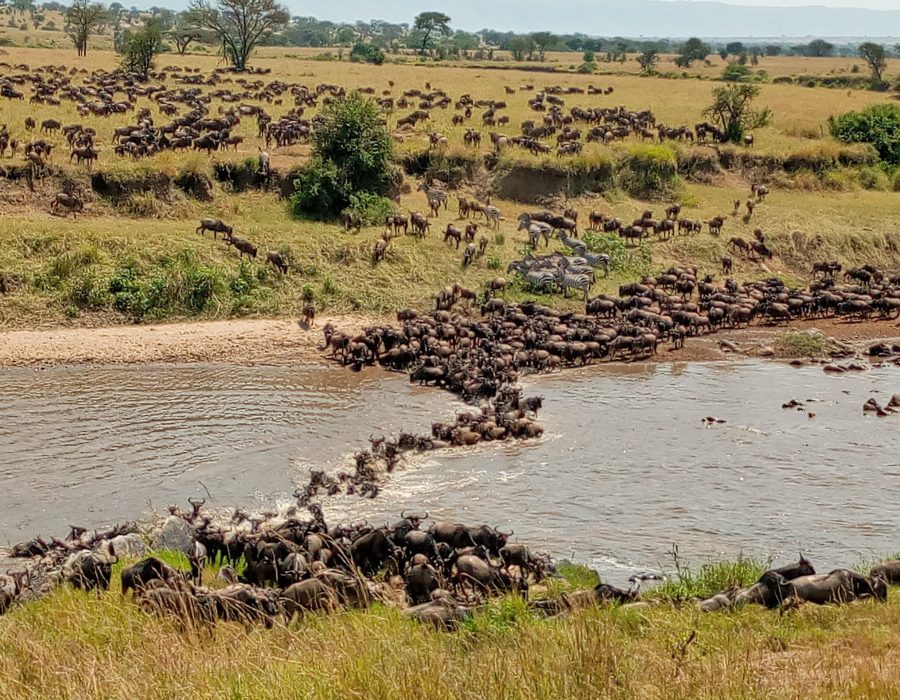
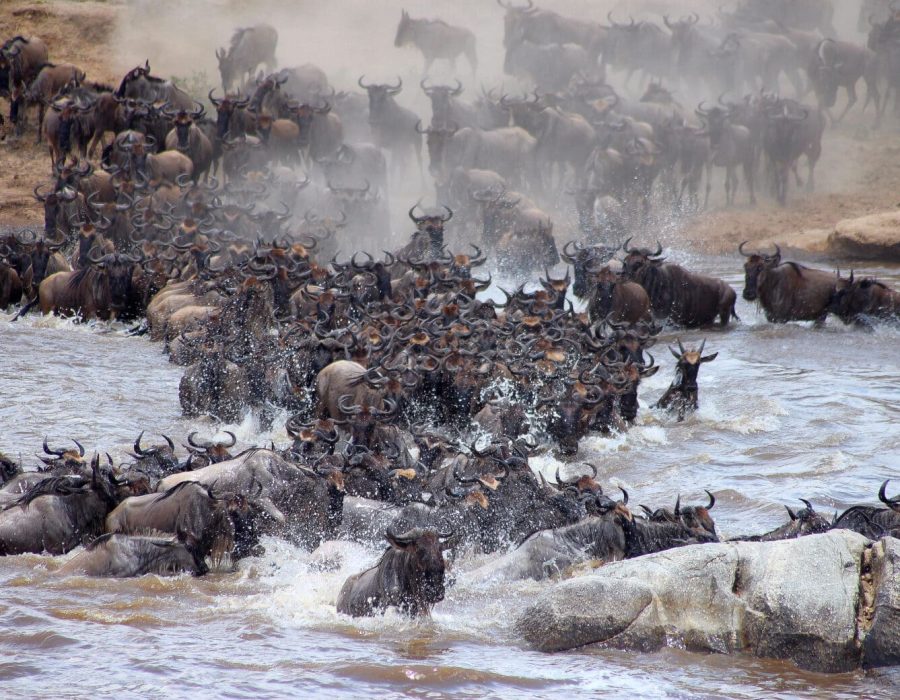
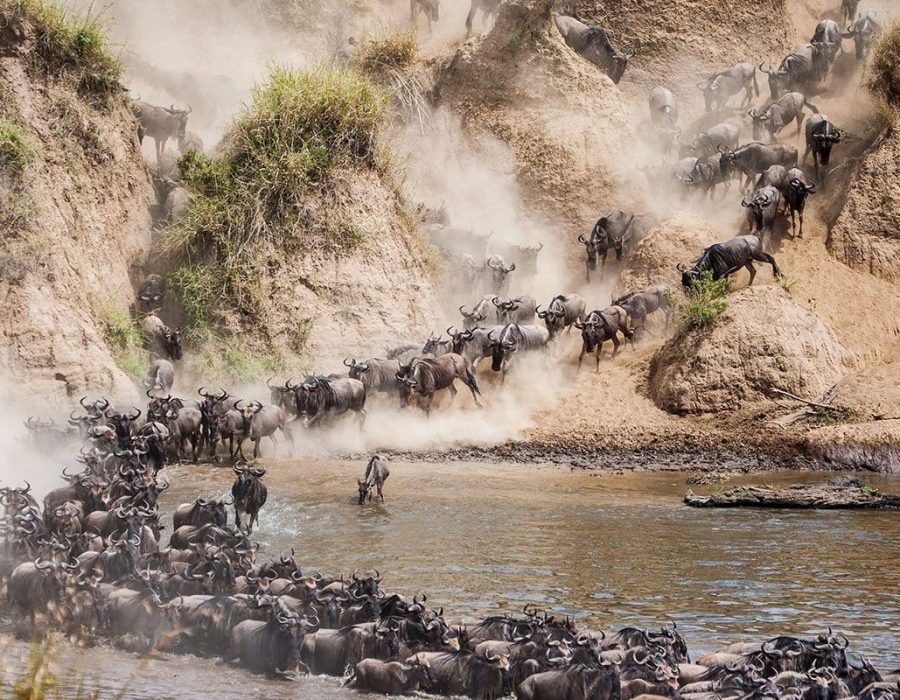
Start of Serengeti Map of Wildebeest Migration - Herdtracker
HerdTracker great wildebeest migration map - wildebeest Migration Starts in Serengeti
Wildebeest Migration in Serengeti is believed to start in the South from a region known as Ndutu Conservation Area that borders both Serengeti to the south and Ngorongoro Conservation Area to the East.
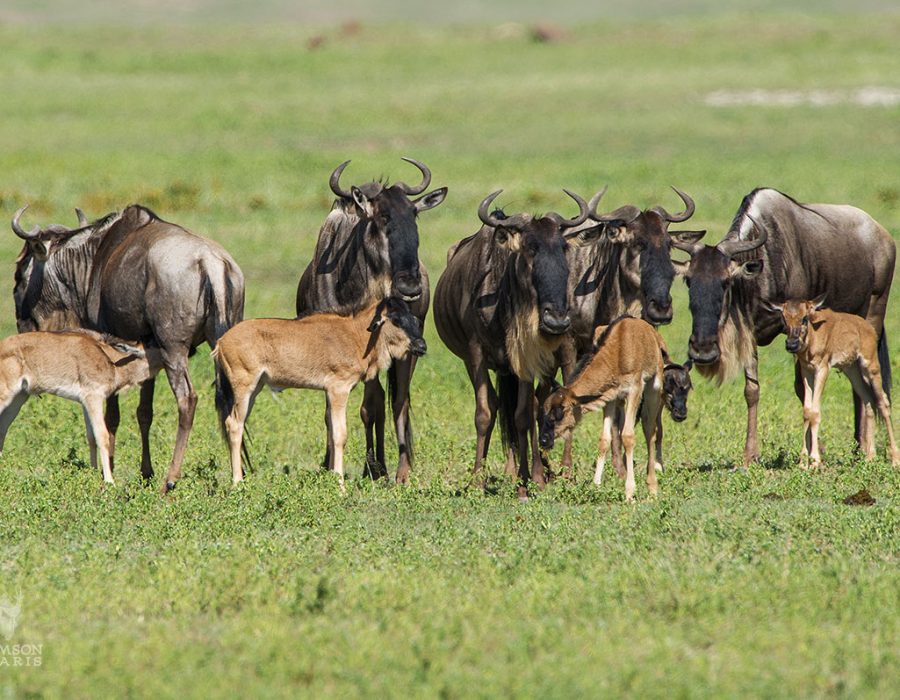
The reason why its beleived to start here is when wildebeest calves are born and start their adventurous life. The Serengeti Migration Map shows a month-to-month guide of how it starts, all the way to how it ends.
January location and Map of Wildebeest Migration in 2026 and 2027
In January, the wildebeest migration is in the Ndutu Conservation Area, most of them have converged here for their annual biological obligation, which is wildebeest calving or wildebeest birthing. The temperatures in Ndutu are favorable. They share the same as Serengeti National Park.
The weather in Serengeti and Ndutu in January is pleasantly warm with a gentle breeze, with average highs of 81°F (27°C) and lows of 60°F (15°C).
January (as well as February) however is the hottest time of year in Tanzania. Generally, January is hot and humid, falling during our green season, so named for the rich, lush, green landscapes (perfect for photography!). Occasional rainfall provides a welcome respite from the heat.


February location and Map of Wildebeest Migration in 2026 and 2027
The weather in Serengeti National Park in February is pleasantly warm with a gentle breeze, with average highs of 84°F (29°C) and lows of 61°F (16°C). It has no difference in temperatures in January. This temperature is the same as well in Serengeti and some sections of the Ngorongoro Conservation Area.
The weather in Ngorongoro Conservation Area in February is mildly cool, humid but cool, with average highs of 76°F (25°C) and lows of 56°F (14°C). Afternoon temperatures are usually around 25 -30°C, and night temperatures are around 12-18°C in areas of Serengeti South and Ndutu Area together with Ngorongoro.


March location and Map of Wildebeest Migration in 2026 and 2027
The weather in Serengeti National Park in February is pleasantly warm with a gentle breeze, with average highs of 84°F (29°C) and lows of 61°F (16°C). It has no difference in temperatures in January. This temperature is the same as well in Serengeti and some sections of the Ngorongoro Conservation Area.
The weather in Ngorongoro Conservation Area in February is mildly cool, humid but cool, with average highs of 76°F (25°C) and lows of 56°F (14°C). Afternoon temperatures are usually around 25 -30°C, and night temperatures are around 12-18°C in areas of Serengeti South and Ndutu Area together with Ngorongoro.


April location and Map of Wildebeest Migration in 2026 and 2027
Wildebeest Migration in April is around Central Serengeti, Seronera Region. They mostly stick around Seronera, Central Serengeti, grazing and feeding for about wo months, April and May.
The minimum and maximum temperatures vary with the seasons, with the wet season being the warmest. The Seronera area rarely exceeds 37 °C on a hot afternoon in the rainy season, and hardly ever dips below 13 °C on a cold early morning in the dry season.

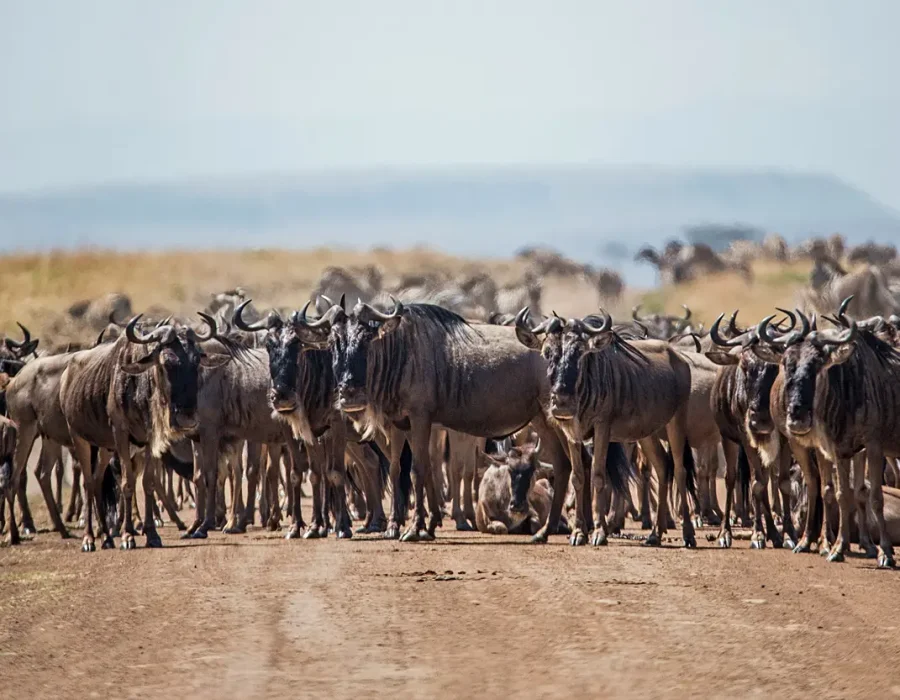

May location and Map of Wildebeest Migration in 2026 and 2027
Wildebeest Migration in May has no different with April, since they all stay around Central Serengeti, Seronera Region. But some herds can be spoted in Grumeti Region, towards northern Serengeti.
The minimum and maximum temperatures vary with the seasons, with the wet season being the warmest. The Seronera area rarely exceeds 37 °C on a hot afternoon in the rainy season, and hardly ever dips below 13 °C on a cold early morning in the dry season. Some days might be abit hot and dry.
June location and Map of Wildebeest Migration in 2026 and 2027
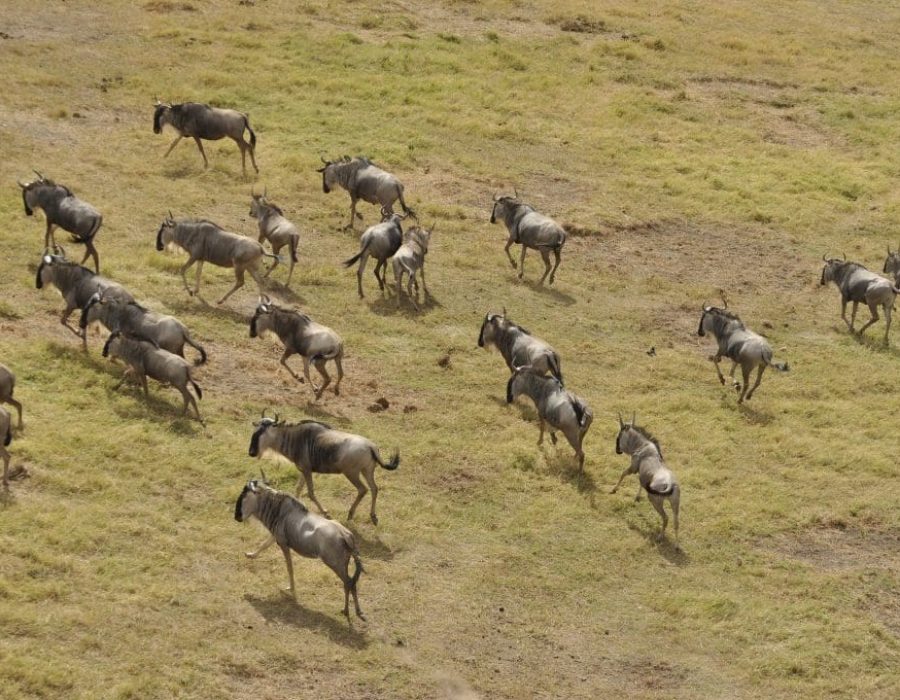
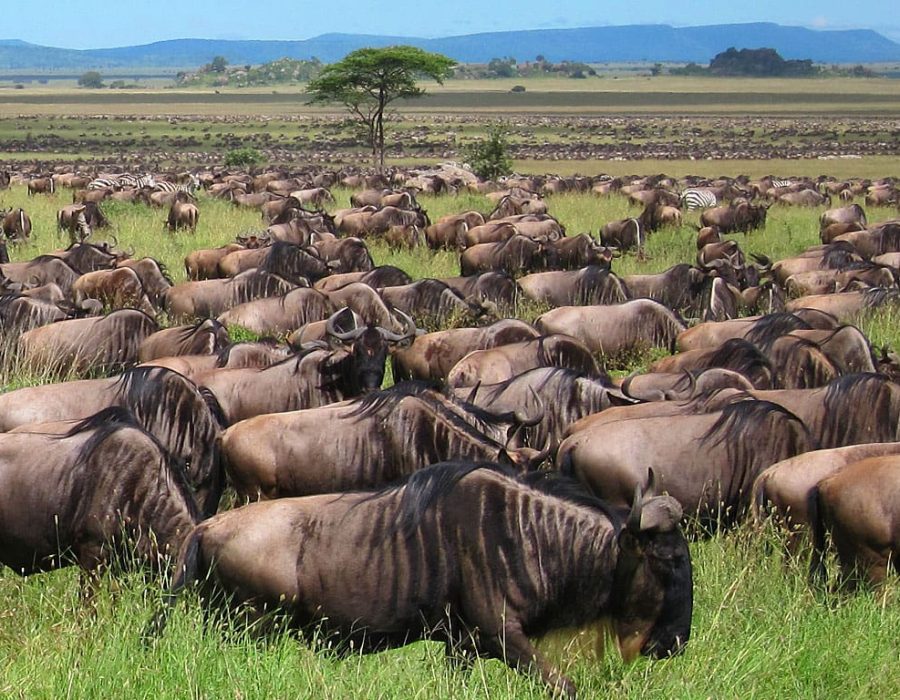
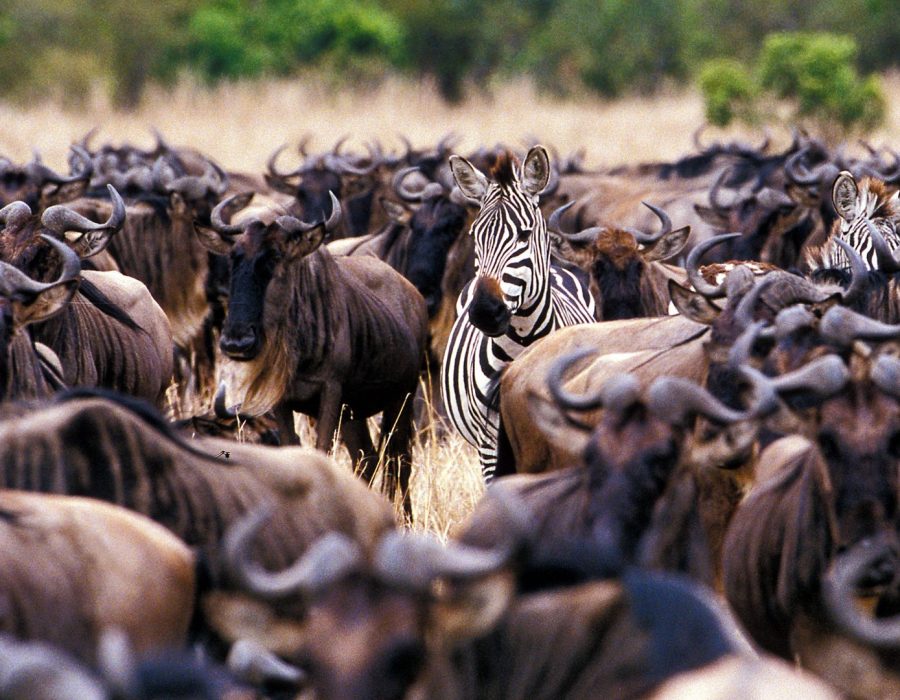
Wildebeest Migration in June starts to move up further north of Serengeti, Seronera Region. They will be on the move towards the northern sides, some will be in the Grumeti Area. This closes near to the Great Wildebeest Crossing but still, they take a bit of time. In some years, they have been sighted severally even crossing to Masai Mara as early as early June.
The minimum and maximum temperatures vary with the seasons, with the wet season being the warmest. The Serengeti North area rarely exceeds 32 °C on a hot afternoon in the rainy season, and hardly ever dips below 13 °C on a cold early morning in the dry season.
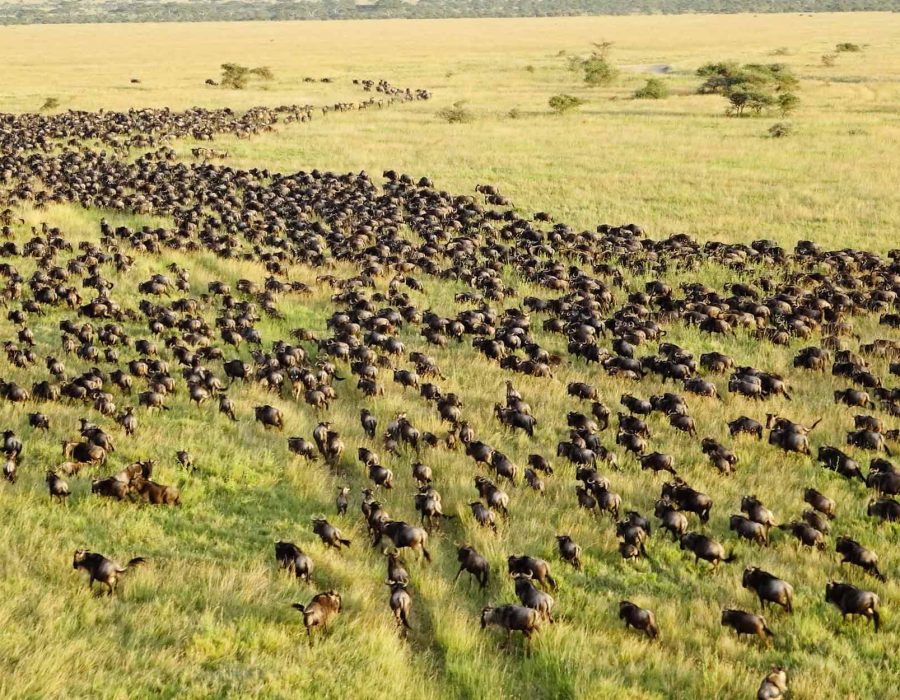

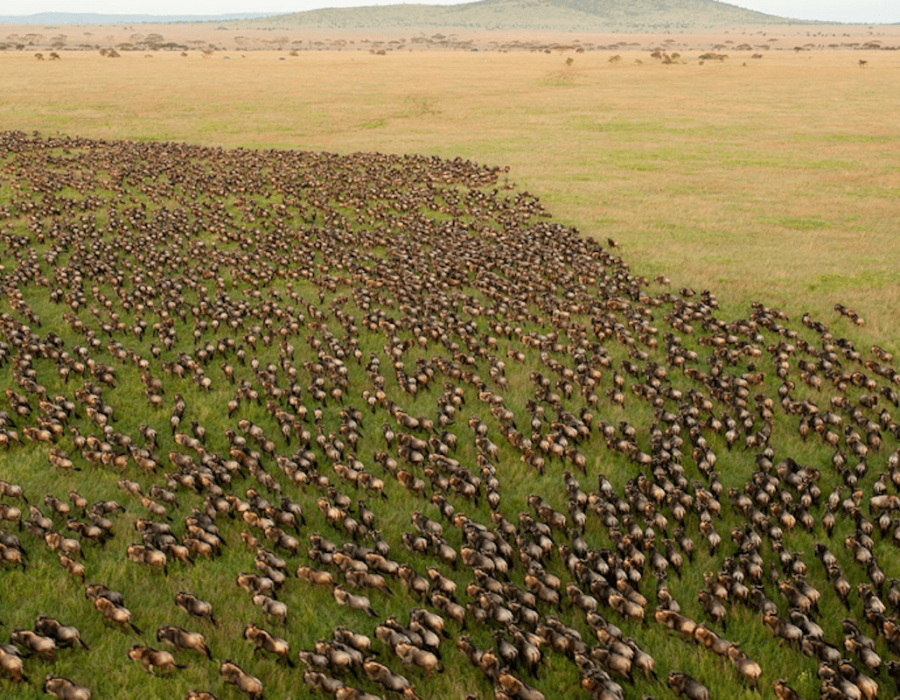
July location and Map of Wildebeest Migration in 2026 and 2027
Wildebeest Migration in July arrives in Northern Serengeti, and crossings might be seen, though not intense crossings. The intensity of the crossings grows towards the end of July as they cross to Masai Mara in Kenya.
The minimum and maximum temperatures vary with the seasons, with the wet season being the warmest. The Serengeti North area rarely exceeds 32 °C on a hot afternoon in the rainy season, and hardly ever dips below 13 °C on a cold early morning in the dry season.
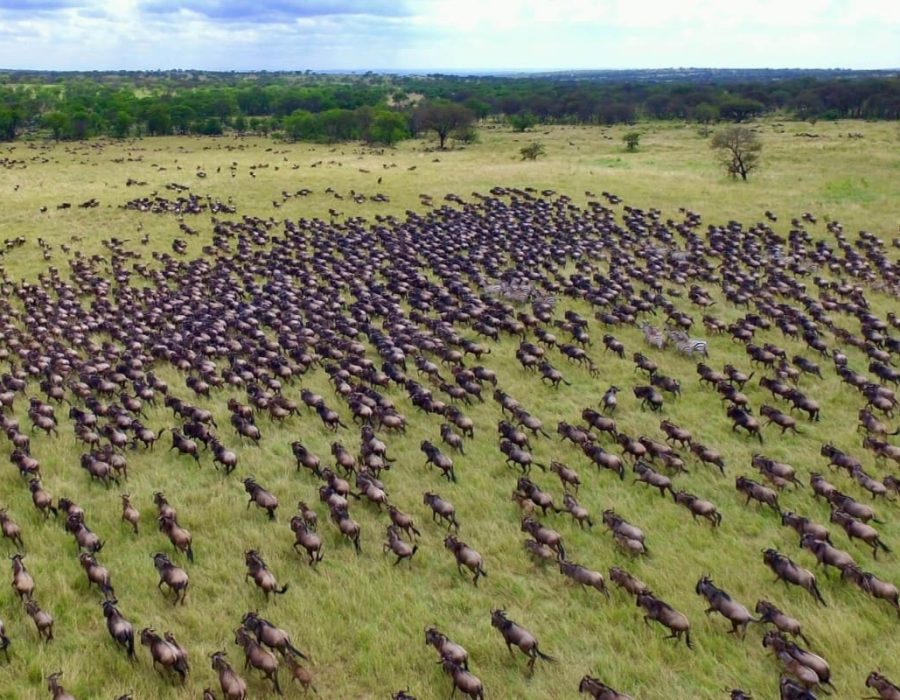
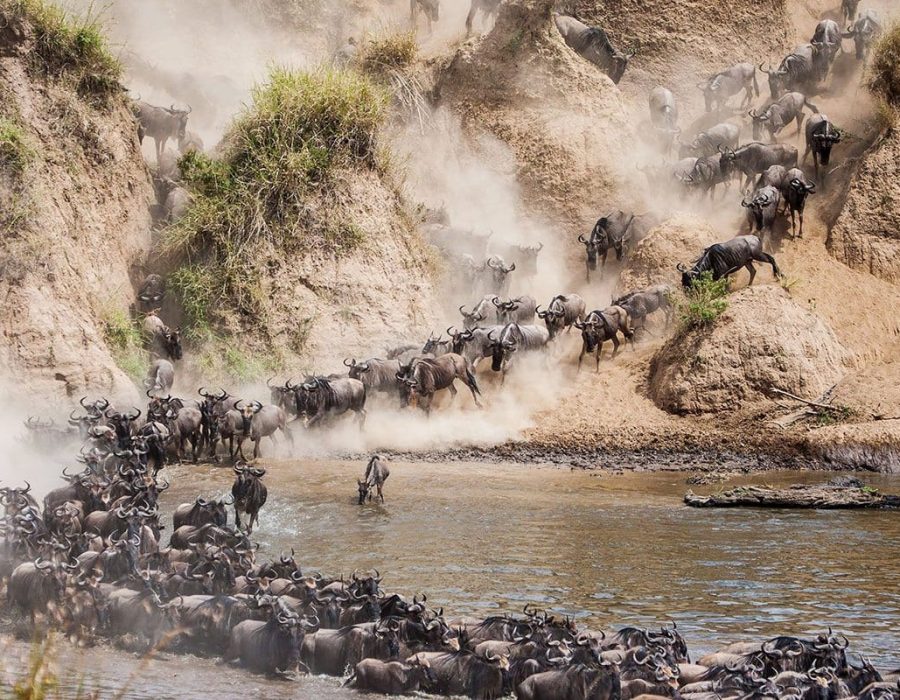
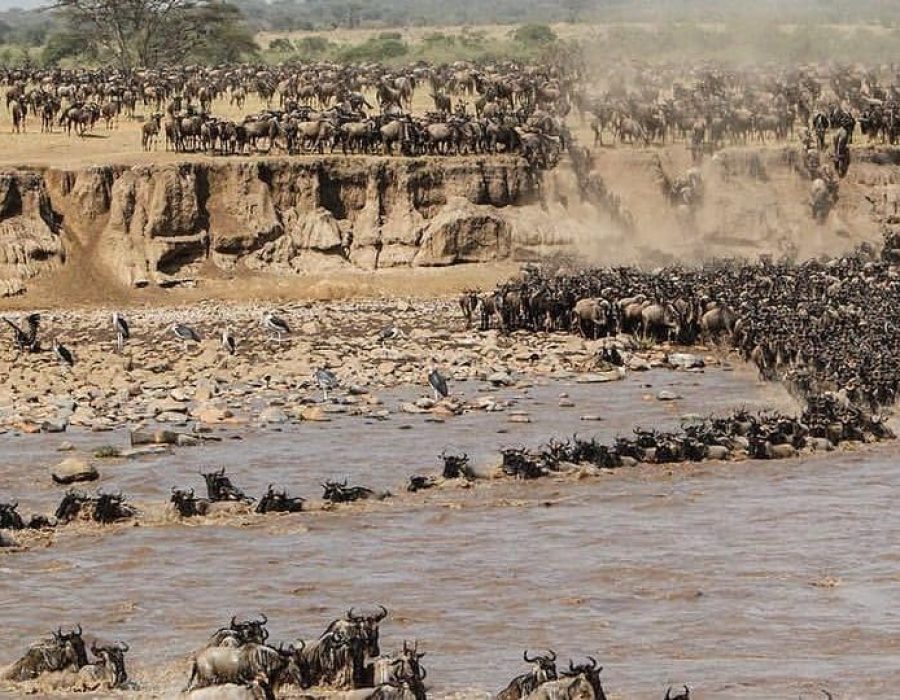
August location and Map of Wildebeest Migration in 2026 and 2027
Wildebeest Migration in August gathers and brings in one of the world’s largest crossings of wildlife in both Serengeti and Masai Mara. The wildebeests have grown in huge numbers in Masai mara. This is the best time to see the wildebeest crossings in Serengeti and Masai Mara.
The minimum and maximum temperatures vary with the seasons, with the dry season being the warmest. The Serengeti North area and Masai Mara rarely exceed 40°C on a hot afternoon in the rainy season, and hardly ever dip below 17 °C on a cold early morning in the dry season.
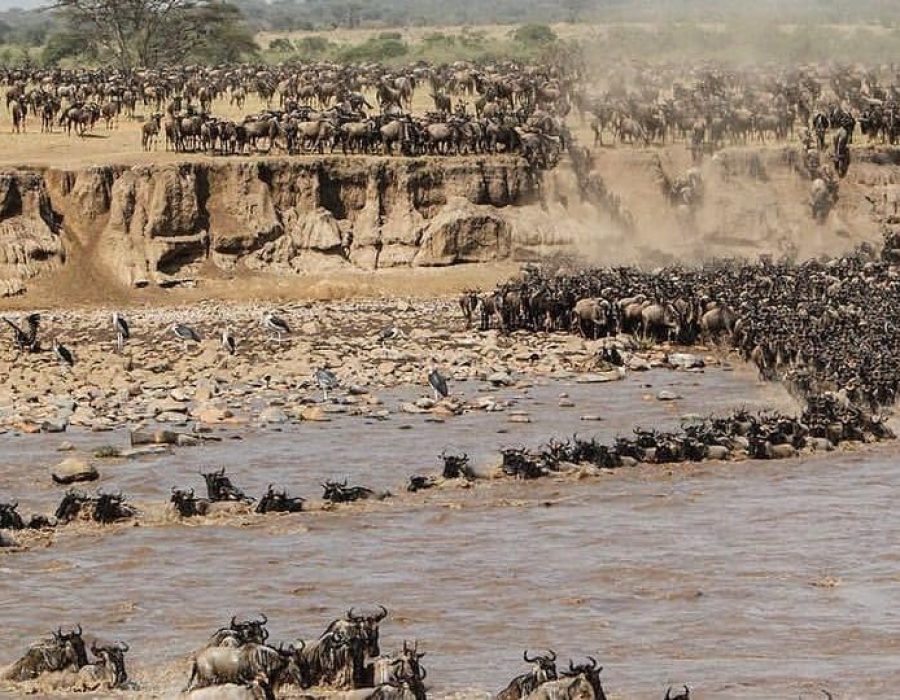


September location and Map of Wildebeest Migration in 2026 and 2027
Wildebeest Migration in September is in Masai Mara and Serengeti. This time, their mating activities intensifies as these regions offer the best weather for mating. Wildebeest crossings continue, but they reduce as the month continues to end.
The minimum and maximum temperatures vary with the seasons, with the dry season being the warmest. The Serengeti North area and Masai Mara rarely exceed 40°C on a hot afternoon in the rainy season, and hardly ever dip below 17 °C on a cold early morning in the dry season.
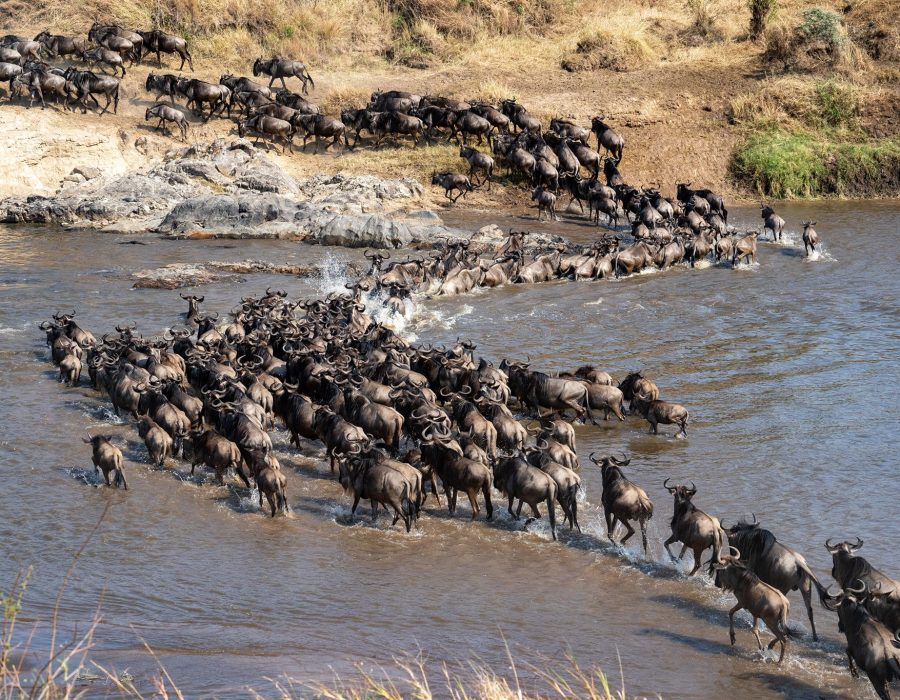
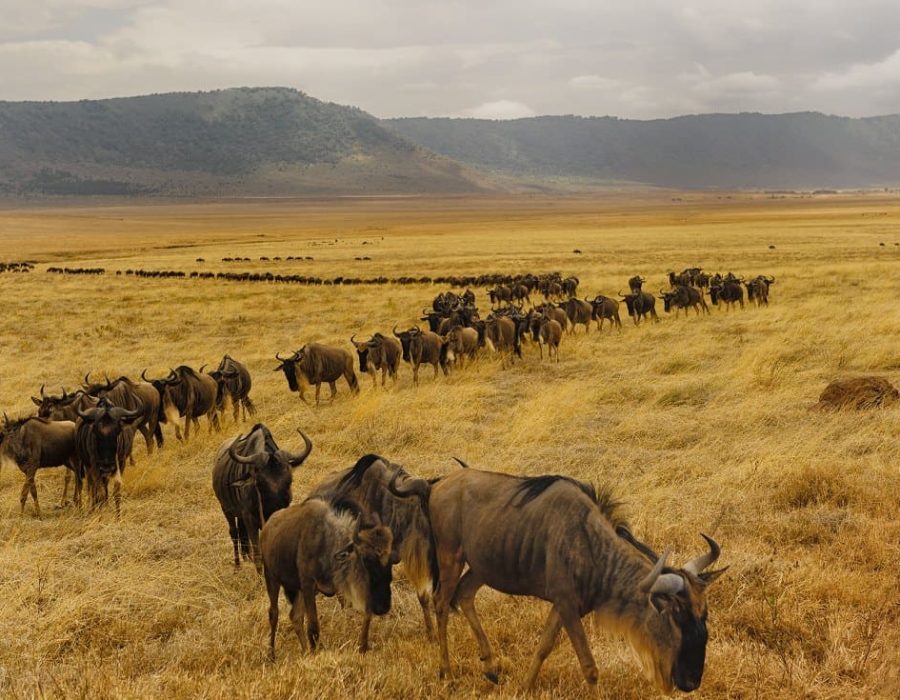

October Location and Map of Wildebeest Migration in 2026 and 2027
Wildebeest Migration in October is in Masai Mara and Serengeti. But the number in Masai Mara has reduced a bit as they head back to Serengeti North. The movement is intense as they move fast back south.
The minimum and maximum temperatures vary with the seasons, with the wet season being the warmest. The Serengeti North area and Masai Mara rarely exceed 32°C on a hot afternoon in the rainy season, and hardly ever dip below 17 °C on a cold early morning in the dry season.
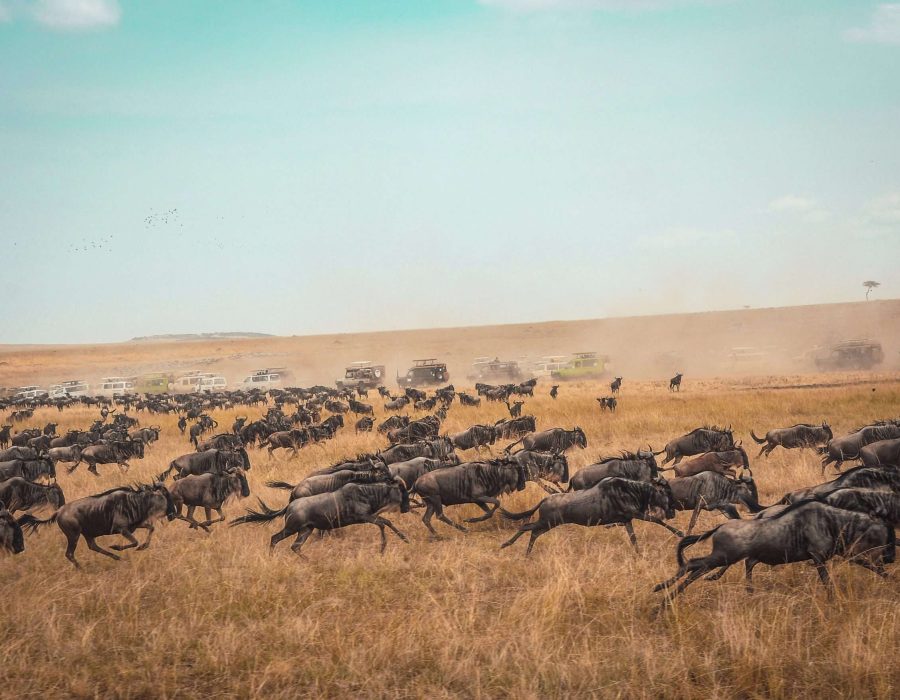
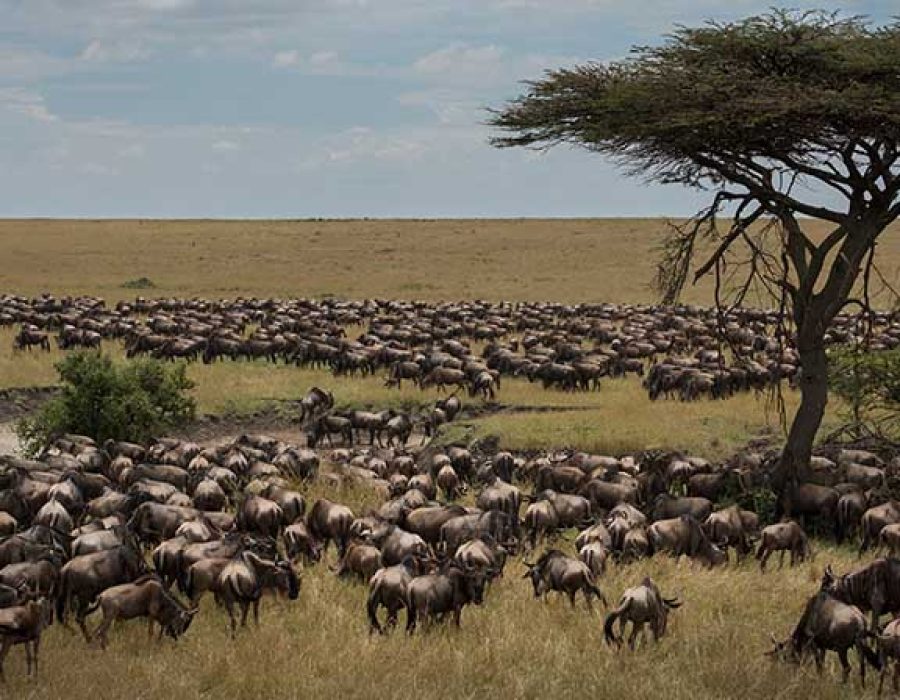
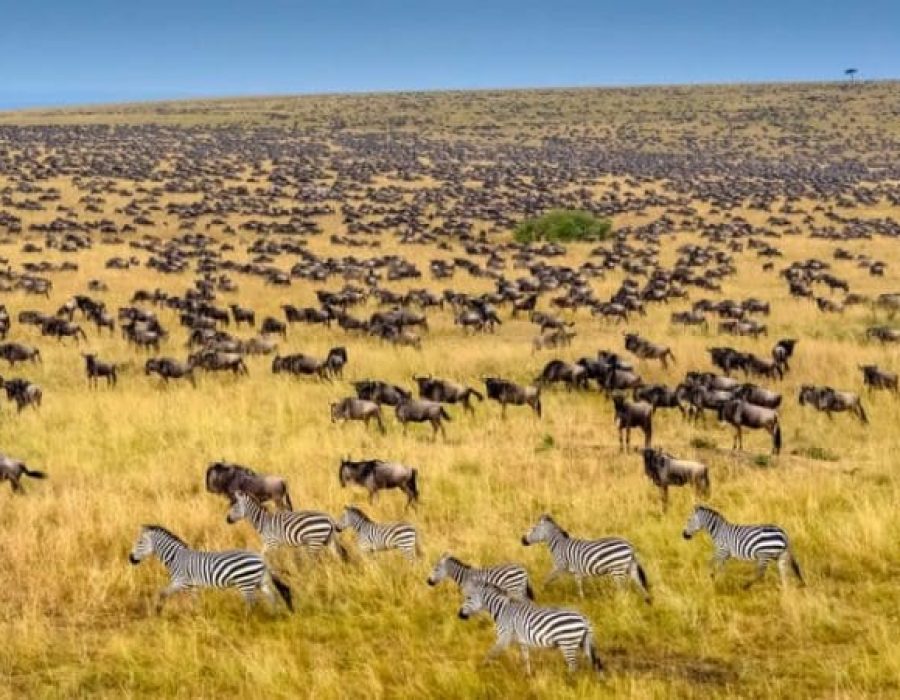
November location and Map of Wildebeest Migration in 2026 and 2027
Wildebeest Migration in November arrives in Northern Serengeti from Masai Mara. They gather in big herds ready to move southward of Serengeti. Their biological call makes them quickly move to Serengeti South through Grumeti, Seronera, and ending in Ndutu.
The minimum and maximum temperatures vary with the seasons, with the wet season being the warmest. The Serengeti North area and Masai Mara rarely exceed 35°C on a hot afternoon in the rainy season, and hardly ever dip below 17 °C on a cold early morning in the dry season.
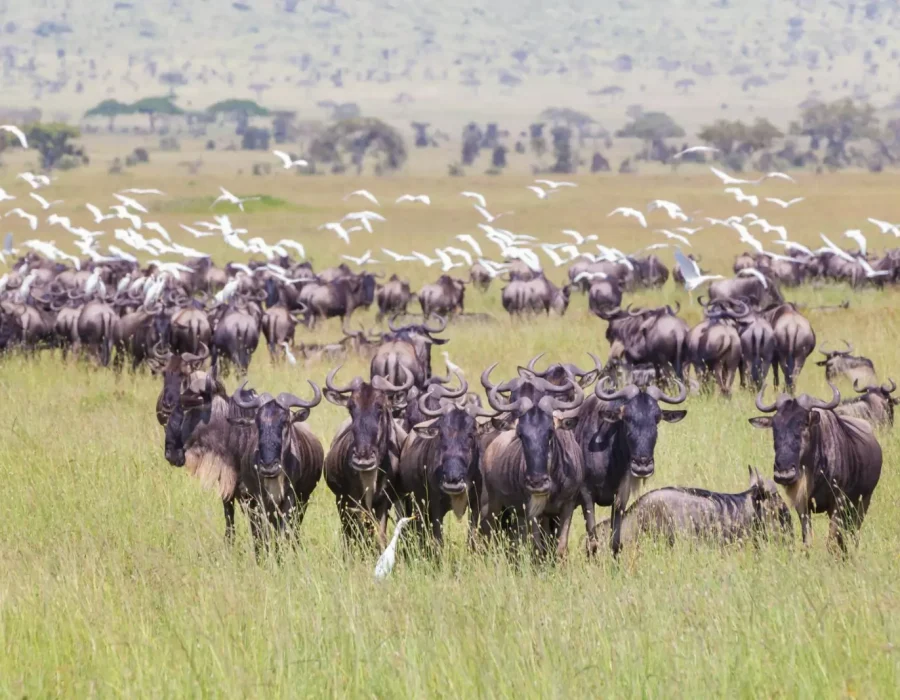

December location and Map of Wildebeest Migration in 2026 and 2027
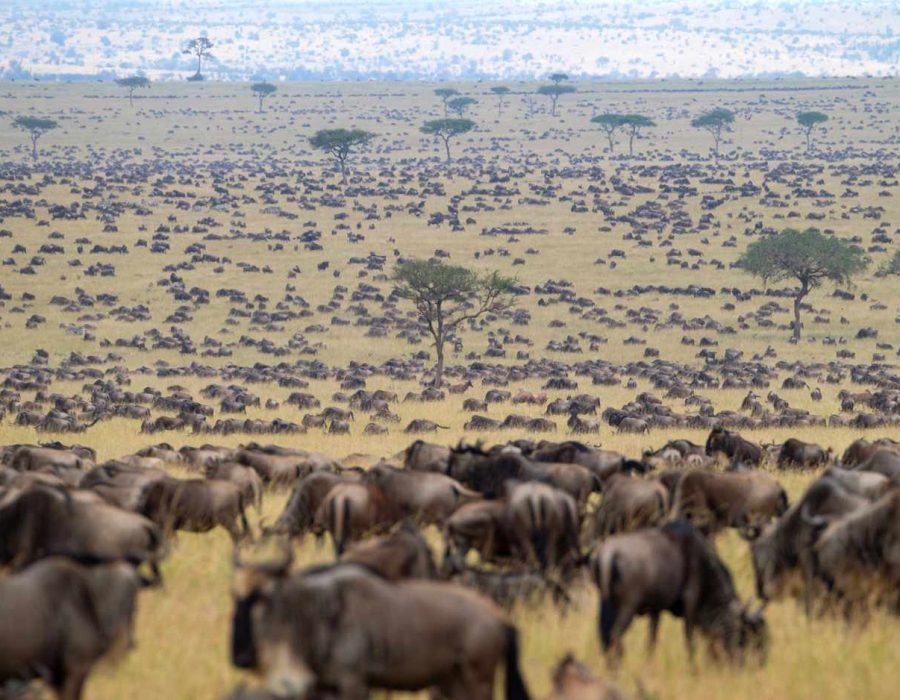
Wildebeest Migration in December moves back south to the Serengeti. They move fast to arrive in Serengeti South and Ndutu preparing for the Wildebeest Calving Season. They are expected to arrive in late December and early January.
The minimum and maximum temperatures vary with the seasons, with the wet season being the warmest. The Serengeti South area and Central rarely exceed 35°C on a hot afternoon in the rainy season, and hardly ever dip below 17 °C on a cold early morning in the dry season.

Wildebeest Migration Safari Packages
Great Migration Safari Tour Packages
We have curated some of the best safari itineraries covering Kenya and Tanzania for the wildebeest migration. Explore our wildebeest migration safari packages that are privately guided, family-friendly, and best for wildlife photographers.
Our experts have curated the best luxury safaris that cover both Tanzania and Kenya. These safari itineraries can be customised to fit your liking and preference.

Experience 15 days of pure wilderness immersion across East Africa’s most iconic landscapes. This journey unites Kenya’s Maasai Mara and Tanzania’s Serengeti for the ultimate

Embark on a 10 day Serengeti Migration Safari that captures the essence of Tanzania’s wilderness. From the baobab studded plains of Tarangire and the dramatic

Embark on a 12 day adventure through Kenya’s most celebrated parks, from the rugged beauty of Samburu and the bird rich Lake Nakuru to the

Experience one of Africa’s most breathtaking natural spectacles, the Great Wildebeest Migration, on this 7 day safari through Kenya’s iconic Maasai Mara. From the vibrant

Explore Tanzania’s most iconic landscapes and wildlife havens on this 12 day Migration Safari. From the elephant dotted plains of Tarangire to the breathtaking Ngorongoro
Why Book Your African Safaris With Wildebeest Sightings.
Book Your African Safari Holiday with Wildebeest Sightings
Wildebeest Sightings are experts in following and tracking wildebeest movements from Tanzania to Kenya. As they move, we locate and track their current location. We understand their movements in detail, with updates and current locations shared on our herdtracker app.
We are professionals in luxury safaris in Kenya and Tanzania. We offer authentic, well-customised and planned safaris across the Serengeti and the Masai Mara. We have partnered with some of the best wildebeest migration camps to bring you close to the real actions.
Safari Experts
Our Experts have broad, wide, and deep knowledge about wildebeest migration in Kenya and Tanzania. We follow and track the wildebeests, and hence, we have close knowledge of where and when to see them.
Financial Protection
We are regulated by the government of Kenya through the Tourism Regulatory Authority. We therefore guarantee secure and safe booking through Wildebeest Sightings.
Proffessional Guides
We have knowledgeable and professional safari guides, ready to take care of you while on safari. From flora and fauna to cultural immersions, they understand all the nitty gritties to make sure your trip is seamless.
Impactful Journeys
At Wildebeest Sightings, its not not only about the wildebeest migration, but we also work closely with impactful initiatives to support and promote sustainable tourism in East Africa.
Previous Wildebeest Sightings
Explore the nearest safari camps and lodges where the wildebeest migrations were seen and spotted. We recommend these wildebeest migration camps and lodges.

Large herds of wildebeest have been spotted moving across the Southern Serengeti, with many calves seen traveling alongside them. The groups...

Another wildebeest birth has been observed on the Southern Serengeti plains, adding to the ongoing calving activity in the region. The...

Another wildebeest birth has been recorded in the Southern Serengeti during the ongoing calving season. The mother was observed delivering her...
Who We Work With
our Every Day Partners helping us to bring you latest wildebeest updates
Below are our proud partners and colleagues who help us get the best wildebeest sightings during the wildebeest migration from the Serengeti to the Masai Mara. We appreciate everyone who supports our efforts and brings knowledge to our readers and visitors.